Bullshit Baffles Brains

Uniconformity? Photo by Scott Webb, via Unsplash (https://unsplash.com)


It’s no mystery that there is a serious crisis in the operation of human society, and there are many explanations for why this has come to pass, but it looks increasingly as though humanity may be nothing more than a failed evolutionary gambit and that we are about to bring our temple down around our own ears in the most Samson-like fashion, at least partly through a lack of ability to deploy the reasoning that was touted as the distinguishing feature of humanity (our opposable thumbs may have been the instrument of our undoing).


This thought got somewhat focused most recently via a piece from urban homesteader Erica Strauss about the fine experience she has had schooling her children at home. There are a couple of really important and relevant reasons why this works, and she lays all this out in a very readable and thought-provoking manner that leaves me with more questions than answers (as thought-provoking pieces should).

Reason number 5 is a good place to start, because it is at the source of all that ensues. Says Ms. Strauss:

The Vice Principal isn’t a bad person, but her world is juggling legally mandated administrative bullshit constantly. I have very little tolerance for administrative bullshit on a good day, and when I think it’s jeopardizing the safety of my kid…well, I know a few terms that describe how deep inside the administrator’s intestinal tract such concerns should be filed, but they might scorch the eyeballs of our more delicate readers.

The public education system has become increasingly tied up with administrative constraints as a succession of governments in most locales have become more prescriptive about what will and what will not be taught and about how student and faculty interactions will be moderated. This, of course, coincides with the rise of litigious behaviour on the part of most everyone concerned with education. In most jurisdictions, the clear trend over that last half century has been to standardization of both instruction and of evaluation and the questions and answers that guide the educational process have been increasingly written by people who know how to run a business within the current paradigm and are more concerned with perpetuating that paradigm than they are with providing an education that will produce a society whose citizens will have some sense of belonging to a common, yet flexible entity. The intellectual and emotional agility to navigate and sustain the sense of belonging and the flexibility to tolerate and encourage a multiplicity of approaches to participating in and shaping society is difficult to engender when the answers must be machine-scored multiple choice in nature, and often, if there is only one right answer, the question it asked would have been totally irrelevant. The saddest part is that the education system abhors unresolved questions and conflicts and enforces conformity of one kind or another using the biggest hammer it can find. It’s the kind of authoritarian treatment that many would like to be able to implement themselves, but that has produced a likely preponderance of students who come through the system with a sense of having survived rather than having been launched on a path to some version of fulfillment.

From this idea stems the rest of the reasons for keeping the kids at home. “It fits our lifestyle” may not be for everyone, especially a household where either or both parents (or a single parent) has an enforced schedule that precludes any thought of spending any substantial part of the day with the offspring, but obviously works for those who have created a life that revolves around the homestead and where both parents, in this case, can devote time to both direct instruction and to the creation of experiential learning events. If we consider that the whole of the school day can be devoted to a “field trip” where there are directed experiences and reflections, we are already likely to generate more curiosity and interest that we would with the typical day in public schools shuffling from one desk to the next, and the encouragement to reflection without outside direction gives the possibility of even greater exploration and synthesis.

A quick digression might be appropriate here, because this is not intended as a diatribe against public schooling. There are many teachers and administrators who go to great lengths to provide students with the opportunity to engage in experiences that will stimulate reflection and questioning. There are, thankfully, still field trips, visiting guest speakers, internet explorations, work experience and other vehicles deployed by concerned educators to flesh out the bare bones of an educational curriculum that is almost constantly in need of supplementation. These educators also know how to modify and adapt both standard curriculum to the needs, readiness and abilities of their students, and they also understand that the impact of the experiences may be delayed as students process and integrate what they have seen, heard, smelled, tasted, touched and shared with other students and staff. However, not all educators operate on this premise, and even those who do face enormous constraints in terms of time, resources and money, as well as strictures in operating procedures and militate against the implementation of anything that deviates in the slightest from the core curriculum and the published institutional routines.

Free from these strictures, parents can achieve what most educators can only admire from afar, and Ms. Strauss is quick to acknowledge that helping hands are readily available:

The resources for homeschooling in our area are incredible. We live in a little pocket of suburban Seattle with many homeschooling families and strong school district support for homeschoolers. In fact, there is a public homeschooling school – with a campus and everything – that we partner with.

If society encourages home schooling and fosters the initiative of parents by providing  resources and constructive guidance, and if there are other homeschooling parents willing to share resources and perspectives, the chances of desirable outcomes are considerably enhanced. This goes hand in glove with being curriculum nerds:

Tactically, we find the planning aspect of homeschooling just kinda…fun. My husband has his masters degree in Adult Education and designs educational curriculum for a living, and nothing makes me happier than a complicated, intricate project requiring nerdy research and multiple spreadsheets. Ask us to plan 4 years of classical high school education and we’ll call that date-night.

I suspect that the Strauss couple has much to contribute to the home schooling of other students in this little universe, endnote everyone would consider the development of learning maps for students to be pleasure on the “date night” scale, but almost everyone can have something to add to the resource pot and many can benefit from the expertise of those who know how to encourage and channel learning.  This is like public school with only the enthusiastic and knowledgeable educators and without the strictures and administrative bullshit.

The other two reasons fall into the general heading of a process that allows for allotment of time according to the needs of the student and the homeschooling parents:


Early grade homeschooling is more like one-on-one tutoring. Unless (student) is a giant ass, it takes us about 45 minutes a day to do a core curriculum – what we call “table work.” We cover math, phonics, handwriting, and reading. He’s 6, heading into 1st grade. That’s all he needs. Over the course of the day we also do history, some art, some science – but that happens more organically. That leaves him a lot of time to still be a kid and just play or deep-dive on his interests.


Homeschooling makes traveling with children so much easier. You can take advantage of off-season discounts and odd-routings to nab great deals on airfare, apartment rentals and more. You can hit popular destinations off-peak and spend less time battling crowds who all have the same 10 day spring break window.


There are some students who go through the standard school system as happy campers, navigating the shoals of curriculum, regimentation, staff and student personality issues and general growing pains with a minimum of fuss. For many, there are anxieties and conflicts to the degree where these vicissitudes can’t be seen as an opportunity to generalize and synthesize some constructive learning. and where the greatest need is for refuge: home schooling can provide that cocoon, but what Ms. Strauss shows is that there is more than shelter in the home school, that learning happens at all hours of the day and night and in physical surroundings far removed from the classroom. The outdoors can be the place and time for all manner of “curriculum fulfillment”, as can time spent at work with a parent, or a trip to the beach, or a visit to a local merchant, baker, or animation studio. Even those who are well-adapted to the maladaptive system often do a great deal of their real learning outside of the classroom, particularly once they can read, and as they learn to observe and interact with their surroundings, the whole world becomes the classroom in a way that is much less constricted than it has perforce to be for those spending the bulk of their days within the four walls of the schoolhouse. If a student doesn’t have to measure learning by keeping pace with his peers in a class, then time and space can be trump cards rather than limitations.

The fly in the ointment arises from this question:

If society is a common undertaking, how much commonality to we need to make it work?

A look at what goes on in what passes for society of late indicates that there is a lot of pull in different directions, intellectually, politically, spiritually and economically that makes us look more like cohabitants than social beings, and, with the “Let’s go to Mars first” crowd, we seem even less inclined to even cohabitate. The recent rise of the terms Fake News and Alternate Facts seems symptomatic of the splintering of any coherent knowledge that would bind us together as a society, and it looks, as times, as though there is an amorphous mass of humanity that is so deeply asleep as to be incapable even of denial of the need to establish common knowledge and, horrors, common sense. The way our current education system works, it seems unlikely that it can be much of a remedy for our current quandary, and the kind of home schooling undertaken by folks such as the Strauss family is great for those who have parents willing to shoulder the load, but for those students without such parents, the options close up quickly, and there will also be those who are homeschooled with the idea of narrowing the education to a set of tenets held closely and dearly by the educating parents who wish to isolate their progeny from the hurly-burly of broader society, meaning that there is a good possibility of cultivating citizens unwilling to participate and interact with all manner of groups in society that don’t share their world view.

There is, of course, no easy answer, and I fear that time and inertia will militate against our being able to achieve some sort of consensus balance in our educational endeavours, though Finland seems to have devised a system where they rely on a short school year, short school days, an inclusive and flexible curriculum implemented by concerned and involved parents and educators and which acknowledges the central rôle played by parents and students in engendering learning outside of school locations and hours. However, even the implementation of that sort of structure seems hard to envision in our current circumstances.

I, of course, have all the answers, but mostly, so does everyone else.

Absurdities, Atrocities


As long as people believe in absurdities, they will continue to commit atrocities. 
 
—Voltaire
It would be no exaggeration to say that absurdities abound in our current social and political realm, and the atrocities, though perhaps somewhat distant and out of the sightlines of those who care to ignore them, are following suit nicely. Syria, Iraq, various South American countries and all over North America with drug wars, oil infrastructure, the sell-off of the commons, the financialization of everything and the rise of the New Selfishness should be enough to convince any sane person that we’ve stepped over a tipping point into something like a cross between Alice in Wonderland and your pick of Kafka’s novels. The responsibility is widespread and manifold: DJT and those who have blown into the Washington vortex as part of his backwash (or advanced guard, depending on your perception of which is the horse and which is the cart )may be more a product than cause, but Republicans of all stripes, as well as mainline Democrats, are very much on the hook for having pursued pretty much the same agenda in favour of the same constituency for decades, with the Dems getting extra credit for acute hypocrisy. The constant fawning over monied interests in pursuit of self-perpetuation in power seems common, even now, in the motivation of both “sides” of the political apparatus.
As Andrew Coyne pointed out in a recent piece about our own PMJT and his broken campaign promises, the fault is also ours for believing the absurdities (such as the idea that an elected politician might actually follow through on stump rhetoric, in this case relating to voting systems). Our behaviour that merits rebuke and reprobation is driven by our ignorance or our sloth, or both, as we don’t generally take the time to be active and informed on the nature of our own governance, sometimes because we just have more gratifying items on the agenda, sometimes because of the conflictual and unpleasant nature of much of the political activity in which we would be called to engage. Same onus for believing in anything but the hollowness of pretty-boy promises, though it must be said that the urgency of expediting an exit for the Harperites might have driven much of the (minority) of votes that JT garnered on his golden path to sunnier days and sunnier ways. Our failure to engage with others on issues of substance, combined with a tsunami of obfuscation and misdirection on the part of most “news” sources ensures that the options at the ballot are likely to be somewhat meaningless. Who knows what might have been better had we elected Angry Tom (anywhere there is Brian Topp, there is unlikely to be much of anything other than back room deals). Thus, we still have corrosive  trade deals, First Nations deprived of the basics of infrastructure that most of us take for granted, pipelines, tankers, fighter aircraft and overseas wars, expensive ancillary health care, rapacious financial institutions lining up at the infrastructure trough and a warped economy to accompany the petty bickering and corruption in legislative assemblies from coast to coast to coast.
Sadly, the time for deep and lengthy dialogue and reflection seems to shorten up constantly as scientific evidence piles up that our existential crises are converging and that their combined tipping points are approaching even more rapidly than we had been given to believe, or perhaps it was just vain hope. Doing nothing, or retreating back into the comfortable cocoon of self-interest are not options, neither does it look like a good option to engage in the kind of aggressive bullying, posturing, nastiness and violence that drives so much of what we call government. meaning that there is almost certain to be a degree of resignation present in any attempt to move people off positions defending a system that is patently in crisis, but that resignation mustn’t preclude steadfastness in whatever attempt is made to leave this place a little better than when it found us.
Valtaire also said, famously:
Il faut cultiver notre jardin. (We must cultivate our garden)
Now here’s what I wanted to contemplate before I go off to chase some of the sustainability, resilience and relocalization that seems so necessary as an antidote to our multilevel Washington-Concensus, Chicago School of Economics, Neo-Liberal, Neo-Conservative, Neo-Fascist way of doing business:
Several decades ago, I bought a used LP at Rohan’s Records on Fourth Avenue in Vancouver, a set by Thomas Jefferson Kaye, for which I paid the princely sum of $1.75, as still attested by the grease pen marking on the front of the jacket. I was initially drawn by the graphics and the name, but likely wouldn’t have bothered to buy it if I hadn’t noticed a couple of names in the liner notes, in particular Rick Schlossen, whom I had recently seen playing with Box Scaggs, and Rick Derringer. So I did buy it, partially because of the star power (my definition) and partly because I knew I could trade it in for most of its face value if it turned out to be a dog. It wasn’t everything I would have liked or anticipated, but it opened up some new doors and has turned out to be a long-time favourite of mine.
This month also brought out a new recording by Bill Kitchen, a twang-master alumnus of Commander Cody and His Lost Planet Airmen, back in the depths of time. Kirchen’s somewhat virtuoso twanging combines with a sense of humour akin to Amos Garrett and Leo Kottke. I like this stuff a lot even if it’s not my main musical interest. Thing is, his new recording, Transatlanticana, also features keyboardist Austin de Lone, of whom I had never seen mention anywhere, but casting about, I did find a set of recordings he did back in 1991, so , with Kirchen’s de facto endorsement, I bought it: love at first listen and a great reward for following he connecting instinct.

Here’s some Thomas Jefferson Kaye with a little Derringer flash at the end:

Food, Life, Profit

In an earlier post, the topic was the usurpation of control and decision-making via the magic of gadgetry, a phenomenon which, for many of us constitutes a step backward in the development of humanity and society. Often of late, so much of the vaunted innovation appears to be for the sake of innovation without a clear set of guiding principles regarding benefits and the recipients of those benefits. We do things because we can, often in the process neglecting more difficult and more pressing challenges, often those requiring sustained and/or concerted effort and little prospect of immediate profit.

The broad strokes of the division between those who would have mankind control all aspects of life on Earth and those who tend to work with and within the forces of Nature is summed up to a point in the following excerpt from an article in Quartz:

The modern food movement has brought us to a fork in the road. On one path are people who say it is enough to eat the fresh fruits and vegetables that spring from the earth, the milk from our cows, and the meat from farmed animals. Simplicity is the path to fulfillment, and sticking close to nature and whole foods is the safest bet for achieving nourishment.
The other vision prescribes that the best diet is one that is predetermined for us, collected by farmers and tinkered with by scientists to help us attain our maximum health and eventually prevent chronic illness. It is more obscure and decidedly high tech.
The argument on both sides of the dichotomy seems almost anodyne and relates to the quest for the ultimate scheme for human nourishment, and perhaps there are points to be made on both sides of the question, but it all falls apart when the underlying notion of the execution of the plan for measured, targeted and controlled nutrition turns out to be more in the interest of a small group than for the betterment of the lot of the majority of living creatures. At the root of the MTC clan is Nestlé, a corporation with a long track record of doing what is profitable, even when the profit is the only benefit and where the source of the profit may be deleterious to society as a whole, thinking of “interesting” recipes for baby formula, the promotion of sugary products and recent pronouncements, backed up by corporate actions, tending to reserve potable water use for the exclusive rights to bottle and sell by none other than Nestlé.
Whatever benefits are outlined in the Nestlé plan tend to induce some head-scratching simply because of the notion that something that might perhaps be for the overall benefit of society might be withheld from those unable to fill the coffers of Nestlé shareholders. It reminds me of a conversation I had with an acquaintance who returned from a retreat with an EST group, a person quite fired up about plumbing the depths and breadths of human consciousness and the attainment of enlightenment. These are laudable enough goals and it all sounded good until the question of “tuition” arose and it became clear that any achieved wisdom would be attained at the cost of a severely depleted bank account, and the sums in question were of a nature beyond keeping the enlighteners in reasonable comfort, and the whole issue sounded as though the enlightened were less concerned about the propagation of wisdom than they were about the accumulation of wealth. Such seems to be mostly the case with the “wisdom” of Nestlé, as well as other purveyors of exclusionary benefits.
It would seem especially and increasingly important that wisdom be shared freely as we approach the apocalyptic consequences of population and consumption overshoot and that we cease to allow the benefits generated by human endeavour to accumulate in the accounts of those who already benefit in outsize proportion to the contributions they make to the future of civilization.

Slapped on Someone Else’s Wrist


VSun reports that BC Hydro is facing large fines for environmental violations as part of the rush to get Site C beyond the point of no return, an event that must trouble Christy Clark and Jessica Macdonald no end. Firstly neither one seems overly troubled by the optics of blindly pursuing  a folly of pharaonic proportions, and, secondly, both are snickering that the paltry hundreds of thousands of dollars will be coming out of the hide of those same BC Hydro clients who will be forced to bear the burden of the cost of the dam, the cost of financing the dam and the cost of furnishing free electricity to the designated industrial beneficiaries, most of whom are found in listings of BC Liberal funders. It makes a person feel a little like a scapegoat tied up tightly with no recourse, especially for those who didn’t vote for the party of fiscal responsibility and business acumen. I know I prefer bungling to the downright nastiness and greed that seems to characterize out current régime.

Choices, Choices

molvote

The above picture depicts a vote in Moldova to elect a president with two candidates in play, one favouring the EU as an alignment the other wanting to take the country back deeper into the Russian sphere of influence. My understanding is that here, as in Bulgaria, pro-Russian candidates have come out ahead in the voting. It could be that the Russophiles have better campaign machines, and it’s reported that the pro-EU parties are considered to be “cleaner”, i.e., less corrupt. It matters little as these seem somewhat like the familiar choice that gets presented to voters in so many jurisdictions where neither of the options is likely to yield a particularly beneficent result.

There is also the question of the information available on which to make a decision, with neither country having a particularly sparklingly clean reputation for press freedom or integrity. This flows from the lack of integrity of the background organizations, the EU and Russia: it seems a choice between one oligarchy and another under either of  which small countries tend to get broken to the wheel of some sort of deep exploitation. It seems clear, in the aftermath of the US election, that many people voted against one or the other of the candidates, often with the sense that neither would be able to bring about an improvement of conditions for most of the broader part of society. Our own election of a year ago seems increasingly to have been fought mostly on a platform of smoke and mirrors, giving us a bit of a gong-show parliament in which the opposition criticizes the government for implementing the same policies that they followed for a decade, and the government plows ahead with the same destructive energy that they promised to alter with their real changes. There have been similar outcomes in Britain, and it looks as though the unSocialists in France are likely to go down in flames for having continued the Sarkozyst line of neoliberal pandering to large international business, to be replaced with some amalgam of rightist plunderers under the banner of Les Répubicains or some such thing.

There are some valiant efforts to relocalize as much of the peoples’ business, but a lot of this is being thwarted by meddling from senior levels of government who work to ensure that there is as little local economic autonomy as possible, leaving the initiatives under way as mostly debate clubs.

What happens when all and sundry find that the options are all being co-opted?


A brief post scriptum to congratulate Steve Darling on his exit from Global BC and subsequent joining of Jas Johal in the parade of press people enlisting in the Christy Clark crime syndicate. Perhaps Steve should read Laila’s List before enlisting, as we can never be too sure that those who read the news actually know what that news is, or what it means.


The Mouse That Mewled

Canada Makes The Big Time…

… for something other than the photogenic quality of its PM.

CF


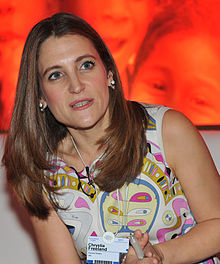
Reported in both the Glob and Male and here, in SF Gate, alternately Canada, or Freeland, walked out of talks with the Walloons (Franco-Belgian Region) in an attempt to bring them to heel so that the EU can sign off on CETA, officially the Comprehensive Economic and Trade Agreement, the latest in a series of treaties aimed at removing barriers to corporate profit at the expense of pretty much everything, including sovereignty, way of life, culture, localization, the environment, sane fiscal policy, taxation, judicial matters, oh, and yes, it does reduce tariffs. However the agreement is dominated by the same ISDS clauses that make the treaty so odious in the eyes of those not likely to cash in on the corporate bonanza and also likely, through taxes, likely to pay for the rich settlements awarded by special tribunals for anything that constitutes a barrier to profits, real or merely possible (and sometimes not ever possible, but, hey!, you never know).

This situation is reminiscent of The Mouse That Roareda silly little bit of fiction from the mid-50s that was notoriously made into a film with Peter Sellers, prophetic is that the whole brouhaha centers on a trade dispute and has a ridiculously small and inconsequential jurisdiction holding sway over a much larger and more powerful entity. And it is likely to remain fluffy fiction, given the simple disparity in the weight of the parties in the international community and the rather narrow leverage at the disposal of the blocking party.

It is comforting to think that there is at least one government, even if only a small regional government, who, in the midst of the pressure from the rest of the EU governments and the establishment in Brussels (no small irony), has the fortitude to speak out in favour of its citizens. Many other EU nations have sizeable numbers of people opposed to much of what happens in the current anti-social iteration of the EU and to what compliant governments in component countries are willing to accept as part of what is supposed to be the economic cornucopia conferred by EU membership. The Greeks are likely the best, if not the only, constituency to poll on that score.

The other signatory to this document is, of course, Canada, and we don’t find much about opposition to this and other agreements in the press, likely because those who own and run the presses are happy to let the sleeping dogs lie and to abet the theft of sovereignty because said owners will be full beneficiaries of the shareholding class’s bonus. In addition, it should be noted that the Sunny Ways government currently installed on Parliament Hill has not been a model of communication or candour about the contents of the treaties they’re looking to sign into law, touting the reductions in trade barriers without mentioning the poison pills of dispute settlement, as well as constraints that will kill initiatives to build local economy or preserve some semblance of a livable environment. In this, as in other instances, Sunny Ways means pretty much the same sludge that we got from Harper and Company, regression rather than progression, profits rather than people, and a narrow circle of beneficiaries connected to Bay Street and the inner sanctums of the Liberal and Conservative parties.


Shakeout Shakedown (A Public Service Announcement)

Today was the great BC Shakeout, a drill for a seemingly likely major earthquake for which we, as BC residents should be as prepared as possible. Here’s the typical illustration of what to do:

shakeout

There are many other preparations, including ensuring that we have a supply of food and clothing to last at least 72 hours, shelter provisions in case of catastrophic building failure and a means to receive communications from competent authorities.

What this illustration does not necessarily depict, but might, is what to do on the approach of the current Liberal crowd in residence at the Rockpile on Belleville. Sadly, there doesn’t seem to be any cover from this crowd:

shake

And, oddly, on Global’s Noon Newsiness, there was a report on Keith Baldrey’s valiant work as a safety marshall wherein he put a yellow hard hat over his helmet and marshalled folks out of the building and onto the lawn because these people know he means business. The only problem, a situation that somehow was omitted from the report, was that the legislature isn’t sitting, and the government caucus is firmly ensconced in a series of cosy lunches and dinners meeting with certain of their constituents who recognize the value in having that well paid and often well remunerated contact with potential MLAs and particularly those folks likely to sit in a cabinet post. The rest of us are pictured above. Just my thought.


Look Who’s Coming (or not) to Dinner

jt-co

Cue the speeches, Manuel Valls has come to give Justin some guidance on Canada’s return to a more active rôle in international affairs. Of grave concern are the possible deployment of Canadian peacekeeping contingents (most likely in Africa) and the hitches that are showing up in the deployment of yet another “trade agreement”, in this case, the Canada-Europe affair, CETA. There is substantial opposition to the treaty, principally because of what it does to the people’s voice in economic affairs and the eternal presence of the same Chapter 11-style dispute settlement mechanism pioneered in the FTA and consecrated in NAFTA, various bilateral agreements between Canada and South American nations, and firmly lodged in the text of the TPP. The centre of dissent at this point is a Belgian region, Wallonia, the French-speaking part, who apparently have some veto power over Belgium’s position and who are considerably less commercially oriented than their Flemish co-citizens. This is not to mention blocs of opposition in many other Euro countries (including France), with a very loud, and numerous, German crowd massing from time to time to voice their opposition and general dissatisfaction with Merkel’s neoliberal policies. The idea strikes fear into the hearts of politicians of Valls’ ilk because it gives dissident minorities tremendous leverage in directing the affairs of the whole EU, and besides, in May Valls’s crowd is up for re-election, or not, running on a record of dismal economic and social performance and general sell-outs to the financial establishment. Many people find it either perplexing or ironic that Valls’s figurehead, François Hollande, and his party get to carry the name of Socialists. But hey, it’s politics, and so, off with their heads!

Accompanying Valls, and not very closely, was this character:


French anti-globalisation activist Jose Bove smokes the pipe as he arrives to attend on October 20, 2008 in Paris a presentation of the alliance "Europe-Ecology rally". The rally gathers trends of the ecology politics to run for the EU elections on June 7, 2009. AFP PHOTO / FRANCK FIFE

French anti-globalisation activist Jose Bove smokes the pipe as he arrives to attend on October 20, 2008 in Paris a presentation of the alliance “Europe-Ecology rally”. The rally gathers trends of the ecology politics to run for the EU elections on June 7, 2009. AFP PHOTO / FRANCK FIFE

José Bové was actually denied entry to Canada the other day, likely because he is in some ways the conscience of whatever French government that is pursuing the environmental degradation of our common living space, and it’s likely that CBSA was alerted to his criminal record and that he might, during a visit to Canada, dismantle a Macdonalds restaurant in Trois-Rivières, or uproot some GMO corn elsewhere in the Eastern Townships or the Ottawa Valley. More likely, his refusal of entry was a sop to Valls so that there would be no countervailing voice in the discussions of peacekeeping in Mali, where, coincidentally, it seems, there are large stocks of uranium ore used by the French to fuel reactors to generate electricity and, coincidentally, create the warheads for the weapons that can be slung under the wings of the Rafale fighters that France is flogging wherever they can find the willing cash.

Bové was eventually admitted, I think, but there has been no reference to him in any source that I read (OK, I haven’t looked that hard), but I imagine that he might have a slightly more difficult time finding a podium and a wide audience than Justin and Manuel.

And while we’re at it, I’m sad to hear that Naheed Nenshi has taken to task those critics of the widespread mining and distribution of dilbit. This also happened to Rick Mercer, who may have redeemed himself somewhat with his rant against Nestlé, but the anti-anti-dilbit comments indicate people who might be a tad too comfortable with current arrangements and whose broader view doesn’t encompass a rapid transition to truly sustainable energy. We don’t expect this from Brad Wall, or from the Sparkle Pony LNG crowd that run the Rockpile on Belleville in our own fair province, but Nenshi and Mercer should be representative of a more forward-thinking view, or at least the ability to ask the questions and to tolerate diversity of opinion.

Who pays for this stuff?

What once might have looked like this...

What once might have looked like this…


...often ends up looking like this.

…often ends up looking like this.

Via Twitter feed this morning, several people have linked to this article in the Vancouver Sun:


http://vancouversun.com/opinion/columnists/jordan-river-salmon-wiped-out-by-copper-tailings


There are abandoned mine and petroleum drilling  sites that continue to dot the landscape and continue to do damage to the environment for decades or longer. This is a sad fact, but compounded by the increasing frequency of these disastrous incursions into the common living space. It would seem that there is rarely any serious and competent remediation that takes place, and the regulation of this phenomenon that does so much damage to what belongs to all of us doesn’t speak well for the people who are elected to look after the best interests of their constituents.

What is missing is a sense that those who broke it ought to be fixing it, and the power of the law should ensure that those who profited from mines and such should also figure in the costs of putting the land, sea, and air right before they move on to the next project. It appears that a set of moral values is not enough to see that this takes place, and, oddly, there seems not to be a process in law for bringing about the necessary remediation on the part of the perpetrators. This happens largely because of the laws regarding incorporation under which the law limits or absolves the miners (et al) of any downstream liability for the consequences of their actions. The standard line from the corporate sector is that these are externalities that have no business on the balance sheet, and that nothing would ever get done were the principal actors and shareholders held to account for ongoing damages.

Perhaps that is a message we ought to take more seriously: if a project can’t profitably be completely remediated, then the project isn’t profitable. Under current law, it is profitable, given that the wealth extracted goes to the principal actors and shareholders who are then allowed to walk away and leave the damages to the public. In the most dire cases, the corporation just declares bankruptcy and bids the whole affair adieu, or manages to gain a bail-out or subsidy of some kind from the government, again putting the commons in the bag for the consequences of private acts.

Dare we contemplate a slower, more broadly rewarding economy where no one escapes liability and accountability and where fewer of these projects happen without a complete plan for protection of the environment? Seems even the thought is beyond the powers now calling the shots, but perhaps as the consequences of fouling our nest become more apparent and unavoidable, a light will begin to shine, though probably too late to ensure a decent living space for all things great and small.

The Right Message

http://mackaycartoons.net

http://mackaycartoons.net

There is much in this cartoon from Graeme Mackay about how politics is practised in most jurisdictions with much room for commentary on how we should govern ourselves, what with politics having pretty much divorced itself from governance. The context for the cartoon could very well be explained in the blog post I read this morning from the Disaffected Liberal:

1.5 C by 2030. 2.0 C by 2050. Let’s Go Out and Get an Electric Car


I know people in our local community who’ve been working on the whole climate change file for a couple of decades already, and have made little in the way of inroads into the general consciousness. The sad fact is that even some of the staunchest proponents of reduction of atmospheric greenhouse gasses are still living a life that produces a healthy dose of said gasses, and no end in sight. In part, this could be attributed to the possibility of a complete loss of credibility in the eyes of Everyman in appearing to be too far out on the fringe, but I also suspect that some of it is just personal and societal inertia.

The Disaffected Lib’s words are important in that they are a warning and a reinforcement of the warnings of Bill McKibben, James Lovelace, James Hansen and the like that a crash is on the way, that we’re making the consequences worse as we fritter away time in political squabbles within an obsolete framework and shirk responsibility or just delay as we wait for the other guy to go first, or for some leader to step up and move the process forward with the expeditiousness appropriate to the situation.

This thought follows on the heels of a conversation I had with a certain local councillor that was more an exploration than a dialectic about the rôle that elected officials ought to play in society, a rôle that has a couple of channels. The first is to to get educated, and then to educate. Our adversarial system often leads officials  to work from a pre-set party platform, often the result of being beholden to a certain group of people in society, sometimes motivated by attempting to right the wrongs of previous groups of the elected, and, facts be damned, to work inside that administrative bubble that allows us to carry on with a dynamic balance that brooks no accounting for crises on the horizon, however close in that horizon might be.

Living as if there were no tomorrow, we are converting a carefree metaphor into a self-fulfilling prophecy.  
—John Whiting
Our own Christy Clark is a perfect example of an elected official who runs her show according to predetermined guidelines as set by her Liberal Party donor list and who wilfully ignores the evidence that cries out that her whole program is not only creating hardship for the majority of her constituents but is also hastening the onset of catastrophe, this in aid of keeping her in the limelight for another term. My sense is that she is at least somewhat aware of the hazardous path on which she has set her administration but that she is unwilling to acknowledge or act upon what she knows, indicating that her need to educate herself is more in the affective domain, in her need to develop empathy and a sense of general justice, than it is in factual scientific learning. Rachel Notley is another who seems more focused on staying in the driver’s seat than on doing what it will take for us to make the needed contribution from our little corner of the world. A clearer vision would see her educating her electorate in the benefits of a shift both immediate and radical to renewable energy and pipelines be damned. Not happening: it’s a daunting task in any jurisdiction, an eminently steeper climb in bitumen-soaked Alberta, especially given the nature of the fossil fuel business and its propensity to concentrate both profit and power outside Alberta. I don’t know if Brad Wall needs to learn the sad facts of physics or whether he is another who wilfully shuns knowdge in pursuit of long-term political power, and Manitoba’s Brian Pallister has, to the best of my knowledge, kept his head down somewhat, but with his party affiliation, it would be easy to plunk him squarely in the Brad Wall camp. Wynne and Couillard have opted for cap and trade schemes, a good idea, perhaps, but easily gamed. Nova Scotia and Newfoundland have a lot of skin in the petroleum game and are likely to be somewhat recalcitrant in coming to the table when it comes to climate disruption.
Sadly, even when there is the best of intentions on the part of those who govern to educate their constituents about the do-or-die circumstances in which we find ourselves, the electorate itself has proven to be resistant to stepping up to accept the new reality. We’ve allowed ourselves to take the path of least resistance, to be lulled into indifference by the press whose stories have, by and large, downplayed any sense of urgency with respect to climate action, and, apart some exceptions, we are either too busy trying to scratch out a living from our current economic mess or just too comfortable to make the effort to readjust our expectations and our willingness to be active participants in what looks to be a monumental and painful march to sanity.
We can all draw our own conclusions. However, possible future generations will not look kindly on the sort of mess we seem on course to leave to those who survive whatever period of readjustment befalls us.