Evoking Vietnam-Era Memes

In an article over on Common Dreams, we get to read the following:

New United Nations ambassador Nikki Haley arrived at U.N. headquarters in New York City for the first time Friday, and wasted no time in lashing out at the international community and U.S. allies.


“For Those That Don’t Have Our Back…We’ll Respond Accordingly,” she says, and goes on about “taking names”.


This reminds me of the Vietnam-era “My Country Right or Wrong” outlook which, ultimately ignores the founding idea of the U.S., a country forged to respond to a set of grievances relating to wrong-doing in the mother country.

It speaks to a very limited idea of what constitutes any notion of diplomacy and mature interaction with other nations and groups around the globe. Yes, a lot of traditional diplomacy is based on secrecy, subterfuge, dishonesty and backstabbing, but threats of this nature rarely produce constructive results, and the bluster that is here deployed speaks to a very unsubtle cowboy mentality which would only produce results via the unleashing of extraordinary force (move the Doomsday Clock even closer to midnight?)

It also reinforces the idea that we are dealing here with a pack of brats of varying ages and experience who make up in chutzpah what they lack in knowledge and wisdom and who are totally self-absorbed.

Cartoon by Clay Bennett Chattanooga Times-Free Press


Alternatively…

This was the end quote from yesterday’s edition of MIT Tech Review’s The Download mailing list:

The more voices of reason that the President hears, the better. Simply attacking him will achieve nothing. Are you aware of a single case where Trump bowed to protests or media attacks?”

— Elon Musk explains how he thinks people will have to approach negotiations with Donald Trump, in a conversation with Gizmodo about how useful climate change policies could yet be introduced under his administration.


As I have become older, a little more patient, a little more tolerant and more focused on outcomes than on personality, I would generally concur with Musk, but I find myself asking, in this case, a question slightly rephrased:

Are you aware of a single case where Trump bowed to logic?


Sound the Alarm!

It’s a banner day for headlines at the Globe and Mail.


It starts with this:

Canada’s media industry needs major federal cash injection: report

PPF President Edward Greenspon, who is a former editor-in-chief of The Globe and Mail and a former senior executive at The Toronto Star and Bloomberg News, oversaw the production of the report that was based on consultations with 300 people and a public-opinion poll.

There are actually some interesting propositions in the report, but the flashing red light on the bullshit filter goes off every time there is a reference to the sorry state of the country’s news media, especially when there is a call for public investment in private (for-profit) “news” outlets. These folks have soiled their own nest and often taken sums of cash out of the enterprise through salaries and dividends and failed miserably at informing the public of the events that have, in many ways, beggared the bulk of the country. There is far too cozy a relationship between the organs of the press and the privateers who siphon off an inordinate share of the wealth of the commons. It’s all free market all the time until there is suffering on the part of Bay Street’s minions, at which point the socialism that is so deadly for the working classes is just about a good fit for the poor starving media moguls.


We also get a screed on:

Voting for Conservative leader: What would Stephen Harper do?


Look, it was hard enough putting up with his sneering countenance for the decade leading up to the election of October, 2015, but to have him consulted as a first-case consultant on the election of Donald Trump, or on who should be the long-term replacement for the man at the head of the FedCons is adding more than a bit of insult to the injury he has already inflicted on his poor long-suffering homeland. On top of that, does anyone else get the feeling that the FedCon leadership race is beginning to look a lot like the brewing storm of the Republican nominating process leading up to the Convention last August? Do we see mirror images of people like Ted Cruz, Marco Rubio, Jed Bush, Carly Fiorina, Ben Carson and Donald Trump in the faces of Kellie Leitch, Lisa Raitt, Maxime Bernier and, for God’s sake, Kevin O’Leary? This would all be so laughable if the clown car in the US hadn’t driven up the sidewalk, running over common sense, fiscal responsibility, several and sundry peace processes, voter integrity and the outcome of the Civil War in the process. I fear that Harper is our GW Bush and has spawned a Hillary figure in the form of JT who makes a good case for anyone else without regard to the sanity of the policies behind the figurehead.


We are also treated to this:

Where high-net-worth investors are putting their money right now

Of course, we know where that might be: in shell companies and offshore accounts, as indicated by the latest from the Panama Papers saga, wherein it turns out that Canada is as opaque as any place in the world when requiring or providing information on corporations, and where Canada Revenue chooses not to prosecute the big players because those folks have effective teams of lawyers who can stand weak and ineffectual laws on their heads in the pursuit of shady deals, while the mistakes of small fish are jerked on a hook in a trice.

Aspect number two of this fine piece is that it indicates to whom the G&M panders, and incites the rest of the G&M-reading proletariat to think of themselves as being in the know and as potentially shifting sides in the epic class warfare when their less-than-one-paycheque reserves eventually grow to the point where they will be in the winners’ circle of the Elect of High Net Worth.

And we’re supposed to subsidize this media slag heap?


Food, Life, Profit

In an earlier post, the topic was the usurpation of control and decision-making via the magic of gadgetry, a phenomenon which, for many of us constitutes a step backward in the development of humanity and society. Often of late, so much of the vaunted innovation appears to be for the sake of innovation without a clear set of guiding principles regarding benefits and the recipients of those benefits. We do things because we can, often in the process neglecting more difficult and more pressing challenges, often those requiring sustained and/or concerted effort and little prospect of immediate profit.

The broad strokes of the division between those who would have mankind control all aspects of life on Earth and those who tend to work with and within the forces of Nature is summed up to a point in the following excerpt from an article in Quartz:

The modern food movement has brought us to a fork in the road. On one path are people who say it is enough to eat the fresh fruits and vegetables that spring from the earth, the milk from our cows, and the meat from farmed animals. Simplicity is the path to fulfillment, and sticking close to nature and whole foods is the safest bet for achieving nourishment.
The other vision prescribes that the best diet is one that is predetermined for us, collected by farmers and tinkered with by scientists to help us attain our maximum health and eventually prevent chronic illness. It is more obscure and decidedly high tech.
The argument on both sides of the dichotomy seems almost anodyne and relates to the quest for the ultimate scheme for human nourishment, and perhaps there are points to be made on both sides of the question, but it all falls apart when the underlying notion of the execution of the plan for measured, targeted and controlled nutrition turns out to be more in the interest of a small group than for the betterment of the lot of the majority of living creatures. At the root of the MTC clan is Nestlé, a corporation with a long track record of doing what is profitable, even when the profit is the only benefit and where the source of the profit may be deleterious to society as a whole, thinking of “interesting” recipes for baby formula, the promotion of sugary products and recent pronouncements, backed up by corporate actions, tending to reserve potable water use for the exclusive rights to bottle and sell by none other than Nestlé.
Whatever benefits are outlined in the Nestlé plan tend to induce some head-scratching simply because of the notion that something that might perhaps be for the overall benefit of society might be withheld from those unable to fill the coffers of Nestlé shareholders. It reminds me of a conversation I had with an acquaintance who returned from a retreat with an EST group, a person quite fired up about plumbing the depths and breadths of human consciousness and the attainment of enlightenment. These are laudable enough goals and it all sounded good until the question of “tuition” arose and it became clear that any achieved wisdom would be attained at the cost of a severely depleted bank account, and the sums in question were of a nature beyond keeping the enlighteners in reasonable comfort, and the whole issue sounded as though the enlightened were less concerned about the propagation of wisdom than they were about the accumulation of wealth. Such seems to be mostly the case with the “wisdom” of Nestlé, as well as other purveyors of exclusionary benefits.
It would seem especially and increasingly important that wisdom be shared freely as we approach the apocalyptic consequences of population and consumption overshoot and that we cease to allow the benefits generated by human endeavour to accumulate in the accounts of those who already benefit in outsize proportion to the contributions they make to the future of civilization.

Slapped on Someone Else’s Wrist


VSun reports that BC Hydro is facing large fines for environmental violations as part of the rush to get Site C beyond the point of no return, an event that must trouble Christy Clark and Jessica Macdonald no end. Firstly neither one seems overly troubled by the optics of blindly pursuing  a folly of pharaonic proportions, and, secondly, both are snickering that the paltry hundreds of thousands of dollars will be coming out of the hide of those same BC Hydro clients who will be forced to bear the burden of the cost of the dam, the cost of financing the dam and the cost of furnishing free electricity to the designated industrial beneficiaries, most of whom are found in listings of BC Liberal funders. It makes a person feel a little like a scapegoat tied up tightly with no recourse, especially for those who didn’t vote for the party of fiscal responsibility and business acumen. I know I prefer bungling to the downright nastiness and greed that seems to characterize out current régime.

Choices, Choices

molvote

The above picture depicts a vote in Moldova to elect a president with two candidates in play, one favouring the EU as an alignment the other wanting to take the country back deeper into the Russian sphere of influence. My understanding is that here, as in Bulgaria, pro-Russian candidates have come out ahead in the voting. It could be that the Russophiles have better campaign machines, and it’s reported that the pro-EU parties are considered to be “cleaner”, i.e., less corrupt. It matters little as these seem somewhat like the familiar choice that gets presented to voters in so many jurisdictions where neither of the options is likely to yield a particularly beneficent result.

There is also the question of the information available on which to make a decision, with neither country having a particularly sparklingly clean reputation for press freedom or integrity. This flows from the lack of integrity of the background organizations, the EU and Russia: it seems a choice between one oligarchy and another under either of  which small countries tend to get broken to the wheel of some sort of deep exploitation. It seems clear, in the aftermath of the US election, that many people voted against one or the other of the candidates, often with the sense that neither would be able to bring about an improvement of conditions for most of the broader part of society. Our own election of a year ago seems increasingly to have been fought mostly on a platform of smoke and mirrors, giving us a bit of a gong-show parliament in which the opposition criticizes the government for implementing the same policies that they followed for a decade, and the government plows ahead with the same destructive energy that they promised to alter with their real changes. There have been similar outcomes in Britain, and it looks as though the unSocialists in France are likely to go down in flames for having continued the Sarkozyst line of neoliberal pandering to large international business, to be replaced with some amalgam of rightist plunderers under the banner of Les Répubicains or some such thing.

There are some valiant efforts to relocalize as much of the peoples’ business, but a lot of this is being thwarted by meddling from senior levels of government who work to ensure that there is as little local economic autonomy as possible, leaving the initiatives under way as mostly debate clubs.

What happens when all and sundry find that the options are all being co-opted?


A brief post scriptum to congratulate Steve Darling on his exit from Global BC and subsequent joining of Jas Johal in the parade of press people enlisting in the Christy Clark crime syndicate. Perhaps Steve should read Laila’s List before enlisting, as we can never be too sure that those who read the news actually know what that news is, or what it means.


Lest We Forget, or Perhaps We Never Knew

rd


Just a note to say that, despite the outpourings of respect for those who fought in wars, the markets are open today as usual.


Comment from one of the wise:

I am a very privileged man. My son is the fourth generation of my family who has not fought in a war. I have family members though who have sacrificed lives, and or, their soul and families to war. For them, I remember and hold respect for them, not the politicians who created the situation they had to risk their lives to change. Please educate your child to make them aware of other people’s ways and differences and teach them to respect the lives of everything on this blue planet. Through love, respect, knowledge, acceptance of others, and equality we can make wars history. Lest We Forget.


From the lyrics bin (listen below, loud music alert)

Yes business as usual
And there’s people for sale
They’ll buy and they’ll sell you
They’ll fight tooth and nail
Cause business is business
There’s always the cry
You’re all caught up
In a network of lies

–Robin Trower


Dialogue de Sourds, Headbashing Forever

dotd

Milton Friedman and Friedrich Hayek, amongst others, have long taught that we need to live in a society of unfettered markets, markets defined by and tailored to suit the needs of those whose principal drive is the accumulation of wealth, and therefore power, in the hands of the same people writing the definitions and the laws and processes that derive therefrom. How is this working for you? How is it working for your neighbours, friends, colleagues and fellow citizens. Is it looking as though, words aside, it is taking us to a rosy future of economic, social and environmental security? We will have different answers, of course, and likely depending upon where we sit in the economic hierarchy, and many of us not only have never known any other model, but may also not have considered any other model, along the lines of Margaret Thatcher’s pronouncement about there being no alternative and Francis Fukuyama’s jubilant declaration that we’ve reached the end of history, what with the fall of the Soviet Union.

There are rumblings: Anonymous, Idle No More and a host of protests about particular issues and projects, as is the current No Dakota Pipeline movement in the Dakotas and fanning out into Indigenous communities, and, slowly it is dawning on some groups that they will continue to burn the soles of their feet stamping out wildfires as long as there is systemic creation of irritants. Most of us are so busy with the concerns of day-to-day life, paying the bills, raising the children, ensuring that work is going as well as it can and trying to maintain a decent standard of living with, perhaps, some recreation built into the mix, that we hardly have time to investigate matters of governance, of resource usage and allocation, of attempts to manage the living system that hosts us. Additionally, since our neighbours share the same concerns and burdens as we have, the larger topics are unlikely to make it onto the docket for Friday conversation over coffee, or beer, or dinner. It is no help that what confronts us when we dial in the television, the radio, or go to our favourite respected news site on the Web is an amalgam of feel-good human interest stories, cat videos, fluff posts about health studies, updates on distant wars and terror attacks, threats from asteroids and earthquakes, and inducements to buy as much as you can afford, and then some.

Perhaps everything, as the fictitious philosopher Pangloss oft iterated, is arranged for the best in this, the best of all possible worlds. There are those who suspect that there are several things rotten in the Kingdom of Figurative Denmark and whose fears might be quelled by some open dialogue that at least challenges the accepted doctrines of the Chicago School and the Washington Consensus. This falls under the heading of the life needing to be examined in order to gain legitimacy. The prescription is neither endorsement nor condemnation, but the examination through dialogue of what the possibilities might be.

To that end, I would like to invite all and sundry to an event, a ninety-minute film screening with the possibility of a conversation to follow in what seem to be rather convivial surroundings:
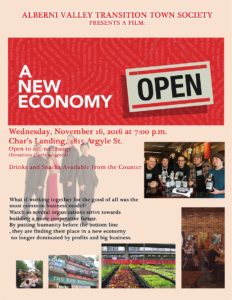
webneweconposter

The film is biased as heck in favour of co-operatives. No one has to agree, because alternatives have to withstand challenge. However the simple act of discussion might produce some interesting possibilities.  There is no cost to get in, and you don’t really have to buy anything, though I know Char would welcome your custom and support. No one is taking attendance, and you can leave at any time. Or you can stay and be a champion of your ideas.

Hope to see you there.


The Mouse That Mewled

Canada Makes The Big Time…

… for something other than the photogenic quality of its PM.

CF


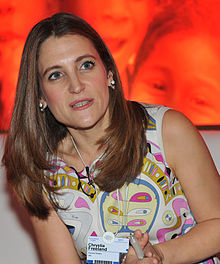
Reported in both the Glob and Male and here, in SF Gate, alternately Canada, or Freeland, walked out of talks with the Walloons (Franco-Belgian Region) in an attempt to bring them to heel so that the EU can sign off on CETA, officially the Comprehensive Economic and Trade Agreement, the latest in a series of treaties aimed at removing barriers to corporate profit at the expense of pretty much everything, including sovereignty, way of life, culture, localization, the environment, sane fiscal policy, taxation, judicial matters, oh, and yes, it does reduce tariffs. However the agreement is dominated by the same ISDS clauses that make the treaty so odious in the eyes of those not likely to cash in on the corporate bonanza and also likely, through taxes, likely to pay for the rich settlements awarded by special tribunals for anything that constitutes a barrier to profits, real or merely possible (and sometimes not ever possible, but, hey!, you never know).

This situation is reminiscent of The Mouse That Roareda silly little bit of fiction from the mid-50s that was notoriously made into a film with Peter Sellers, prophetic is that the whole brouhaha centers on a trade dispute and has a ridiculously small and inconsequential jurisdiction holding sway over a much larger and more powerful entity. And it is likely to remain fluffy fiction, given the simple disparity in the weight of the parties in the international community and the rather narrow leverage at the disposal of the blocking party.

It is comforting to think that there is at least one government, even if only a small regional government, who, in the midst of the pressure from the rest of the EU governments and the establishment in Brussels (no small irony), has the fortitude to speak out in favour of its citizens. Many other EU nations have sizeable numbers of people opposed to much of what happens in the current anti-social iteration of the EU and to what compliant governments in component countries are willing to accept as part of what is supposed to be the economic cornucopia conferred by EU membership. The Greeks are likely the best, if not the only, constituency to poll on that score.

The other signatory to this document is, of course, Canada, and we don’t find much about opposition to this and other agreements in the press, likely because those who own and run the presses are happy to let the sleeping dogs lie and to abet the theft of sovereignty because said owners will be full beneficiaries of the shareholding class’s bonus. In addition, it should be noted that the Sunny Ways government currently installed on Parliament Hill has not been a model of communication or candour about the contents of the treaties they’re looking to sign into law, touting the reductions in trade barriers without mentioning the poison pills of dispute settlement, as well as constraints that will kill initiatives to build local economy or preserve some semblance of a livable environment. In this, as in other instances, Sunny Ways means pretty much the same sludge that we got from Harper and Company, regression rather than progression, profits rather than people, and a narrow circle of beneficiaries connected to Bay Street and the inner sanctums of the Liberal and Conservative parties.


Who pays for this stuff?

What once might have looked like this...

What once might have looked like this…


...often ends up looking like this.

…often ends up looking like this.

Via Twitter feed this morning, several people have linked to this article in the Vancouver Sun:


http://vancouversun.com/opinion/columnists/jordan-river-salmon-wiped-out-by-copper-tailings


There are abandoned mine and petroleum drilling  sites that continue to dot the landscape and continue to do damage to the environment for decades or longer. This is a sad fact, but compounded by the increasing frequency of these disastrous incursions into the common living space. It would seem that there is rarely any serious and competent remediation that takes place, and the regulation of this phenomenon that does so much damage to what belongs to all of us doesn’t speak well for the people who are elected to look after the best interests of their constituents.

What is missing is a sense that those who broke it ought to be fixing it, and the power of the law should ensure that those who profited from mines and such should also figure in the costs of putting the land, sea, and air right before they move on to the next project. It appears that a set of moral values is not enough to see that this takes place, and, oddly, there seems not to be a process in law for bringing about the necessary remediation on the part of the perpetrators. This happens largely because of the laws regarding incorporation under which the law limits or absolves the miners (et al) of any downstream liability for the consequences of their actions. The standard line from the corporate sector is that these are externalities that have no business on the balance sheet, and that nothing would ever get done were the principal actors and shareholders held to account for ongoing damages.

Perhaps that is a message we ought to take more seriously: if a project can’t profitably be completely remediated, then the project isn’t profitable. Under current law, it is profitable, given that the wealth extracted goes to the principal actors and shareholders who are then allowed to walk away and leave the damages to the public. In the most dire cases, the corporation just declares bankruptcy and bids the whole affair adieu, or manages to gain a bail-out or subsidy of some kind from the government, again putting the commons in the bag for the consequences of private acts.

Dare we contemplate a slower, more broadly rewarding economy where no one escapes liability and accountability and where fewer of these projects happen without a complete plan for protection of the environment? Seems even the thought is beyond the powers now calling the shots, but perhaps as the consequences of fouling our nest become more apparent and unavoidable, a light will begin to shine, though probably too late to ensure a decent living space for all things great and small.