Competition

FreutschBags


Patronats français et allemands réclament un pacte de compétitivité européen

French and German Business Leaders seek an agreement on European competitivity

I suspect that competitivity is a word made up to describe the competitive nature of an economic unit in terms of labour costs, relative costs of inputs, costs relating to taxes and legal impediments to production and other assorted sticks that get stuck in the spokes of those wishing to make money. I have only heard (seen) it in French media, although I do seem to recall hearing competitiveness around these parts.

In France they have an organization called the Medef, whose equivalent in Germany is the BDI, a group made up of the representatives of the largest business concerns. Much of what they do is to lobby their respective governments on policy matters that affect their ability to do business in as unfettered a manner as possible.This event is like a mini-Davos, and, like Davos, they forgot to send me an invitation.

It isn’t that there aren’t political parties that clearly represent the interests of business and the people who live at that end of the economic spectrum: parties that actually represent the interests of working people are few and considered somewhat on the fringe of the political spectrum: France currently has a Socialist government that gets more of its policies from the Washington Consensus than from any serious socialist theory, a party that has gone the way of Tony Blair’s Labour Party and the Democratic Party in the US.

When these two organizations get together to discuss the competitive nature of business and government policy, we can be sure that they are less interested in competition than in ensuring that wages and benefits, environmental regulations and energy considerations are likely to be diverted to the benefit of the members of their respective organizations and will have little to do with the well-being of either of the countries in question, or of the European Union. Their idea of being competitive is paying workers on a Chinese or Bangladeshi scale, eliminating pensions and sick leave and defunding as much of the social safety net as possible. It begins to look a lot like a cartel.

If you wonder why there are so many strikes in France, in Italy, in Greece, Spain and  Portugal, this has something to do with it. François Hollande, as a candidate, was full of much of the same rhetoric as Obama the candidate. As presidents, they have turned out to be straw men for the commercial class and toxic to the interests of the greater population. The real wonder is that we don’t have more unrest here in North America.

(Original article tom Liberation.fr)

We Don’t Need No Stinkin’ Billionaires…

ToCourt

….’cause we got the government using the taxpayers’ coin to do the billionaires dirty work.

In a recent article on Znet, Gabriel Black describes a lawsuit being heard in California aimed at gutting protections for teachers and doing further damage to the state’s schools through further erosion of budgets:

On Monday, a trial began in Los Angeles County Superior Court that could eliminate teacher tenure in California and have national significance. It is part of a national campaign, led by the Obama administration and supported by both Democrats and Republicans, to victimize teachers for the crisis in public education.

Backed by a host of billionaires and politically connected lawyers, the lawsuit’s complaint cynically seeks to cloak a right-wing assault on teachers and public education under the mantle of securing the civil rights of students. Beneath the lawsuit’s pretense of concern for students is a well-planned initiative to dramatically reduce education costs.

In California, a tenured teacher can be fired for a variety of reasons ranging from “unsatisfactory performance” to “dishonesty” and “unprofessional conduct.” However, a teacher has the right to contest his or her firing and be reviewed by a three-person committee consisting of two teachers and a judge.

Beatriz Vergara, et al. v. State of California, launched by Students Matter with the backing of corporate executive David Welch, challenges the three California State Statues that allow for this hearing process. It also targets a statute that gives teachers the right to tenure and another statute requiring that less-experienced teachers be fired first when budget cuts are imposed.

The complaint alleges that “the challenged statutes have a disproportionate adverse effect on minority and economically disadvantaged students.” The complaint argues that “ineffective” teachers are disproportionately stationed in the schools of these minority areas with low-income earners. These students, they claim, are denied their civil liberty of having equal protection to an education.

The basic demand of those behind the lawsuit is to make it easy to fire more-experienced, higher-paid teachers. Los Angeles Unified School District (LAUSD) superintendent John Deasy, one of the first witnesses called, and an ardent supporter of the lawsuit, told the courtroom that firing was a drain on “human capital” and that it was “too expensive.” In the years leading up to the 2008 crash, the LAUSD successfully fired only between 3 and 6 teachers each year using the dismissal process. In the 2011-2012 year, the year Deasy took over, that number increased to a record 99 teachers.

Nowhere in the complaint is there any hint of the real causes behind the crisis of public education. In the past few years, California’s K-12 annual budget has been cut by about $18 billion. Thousands of schoolteachers have been laid off in California, and hundreds of thousands nation-wide. Throughout the country, teachers face classroom sizes of 50 or more students per teacher, with inadequate textbooks, supplies, and proper cooling and heating systems.

If this all sounds vaguely familiar, then you’ve been paying attention: ever since Gordon Campbell’s tax cutting’ posse moved into the Rockpile on Belleville, provincial revenues have been either curtailed or redirected toward those businesses friendly to the current régime. Recall that more than two billion dollars were immediately taken off the books in reduced business taxes and the parade has continued with monster savings all over the store as whole departments went to the private sector, public servants were shown the door and where it essentially became not only risky, but illegal for those toiling in the public interest to bargain for a reasonable share of the wealth in the best place on Earth.

When the Hole In The Rockpile Gang got a smackdown from the courts at the end of last month, it was clear that they wouldn’t be accepting the judge’s scathing rebuke and making amends for their sins if they could at least drag out the proceedings until they can make an immediate election issue out of it (they may yet do that), or somehow fiddle the process, as they appear to have done in the BC Rail Circus, so that they get the result they want. The BCTF pays its own lawyers: that money comes out of the pockets of he teachers themselves. The government’s layers are paid by thee and me, sorta like I get to pay for the ammunition so I can shoot myself in the foot, a process that rankles more than a little.

Fassbender and the rest of the Deputy Dawgs can’t let this go unchallenged. The cupboard probably is legitimately pretty bare after they’ve reduced oil and gas revenues (thanks Norm) and put on the Five-Ring Circus, complete with shadow-tolled highway, the Millennium Line, Delta Port, SFPR (sounds like something out of ancient Rome), nonsensical IPP contracts (unless you happen to be the IPP on the receiving end) and a couple bridges wherein there is a whiff of cozy relationships between government and winning bidders and little things like secret contracts (the list is not exhaustive, sadly). In truest Shock Doctrine style, they broke it, just hoping they couldn’t be called to account for their actions and inactions, so not only to they have to defend their dominance and nastiness, they have to ensure that no one can go back and scratch around to find out where the money really went, sorta like why we used to be able to afford stuff and somehow we can’t any longer.

Billionaire David Welch can go ahead and blow millions on his case: he gave the money to a foundation that will write him a tax receipt and he may just come out ahead, meaning that he would be using taxpayer money to sue the state, also using taxpayer money, to advance the cause of private education.

OK, I finally got smart and went around Znet’s organizational difficulties and found Black’s article. The end of the article outlines much of what is wrong with unions, and I would be quick to point out that the BCTF lies at the other end of the spectrum: they may not be perfect, but they have done a lot of heavy lifting on behalf of all the citizens of BC (Phil Hochstein notwithstanding) in a scenario where the well being of students aligns well with what the teachers’ union is championing.

This case will probably get settled with only seconds to spare before the world becomes uninhabitable.

Choice, No Choice

croatia-split

As a teen, I got dragged off to Europe, by my parents, for a number of reasons. Some of it was, I think, tied to the idea that the California way of living at the time (1966) was a bit of a gilded cage, and that the offspring could use a little perspective. This was not done lightly, and may have had a note of seeking refuge from the American commercial juggernaut. Whatever it was, there was a particularly interesting interlude of about a month when we crossed the border at Trieste into a (drumroll and dire music) Communist country, the Yugoslavia of the day. Tito’s Yugoslavia was something of a renegade in that there was some leeway for personal and community initiative and where parts of the country were more of a transitional zone between communist and capitalist parts of the world. There was a lot of tourist infrastructure, particularly along the Dalmatian Coast, with evidence that more was in the offing. By Western standards, it was insanely cheap, somewhat frugal, but the beauty of the place and the general warmth of the welcome lent some magic to pretty much the entirety of the month-long sojourn.

Most of our travel was in Croatia, with forays into Bosnia-Herzegovina and Slovenia. We never got into Serbia at all, but these divisions appeared less political and more ethnic and culture at the time, particularly to an outsider who didn’t speak any of the local languages. Encounters with locals rarely veered into the realm of politics or government: it was clear that people were not encouraged to debate the merits of Tito’s rule.

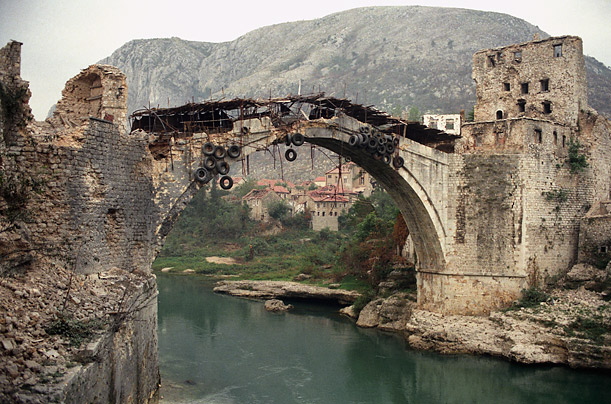
Mostar, when I was there, looked something like this:

Mostar

Mostar, in the midst of the post-Tito dismantling, looked something like this:


Tank Cannon Remodelling

Tank Cannon Remodelling

The horrors of the struggles in Bosnia, in Croatia and, eventually in Serbia are well-documented and a bit of a cautionary tale on what a combination of history, religion and ideology can unleash on entire populations. this was clearly a conflict where insanity prevailed and where there were no good choices, or at least the good choices never made it to the decision-making process.

It has often occurred to me over the last years, particularly in the wake of the Arab Spring, that it is often the case that what might be better choices are often not considered, and this fits in well with a current of thought stating that it would be mistaken to think that those who govern do so in the broader interest of the governed. Egypt seems torn between two utterly blind alleys, Libya is a total basket case and a cauldron of conflict, and Syrians, either wittingly or otherwise, have put themselves into the jaws of a vise where neither side presents anything other than repression and misery. The addition of meddling by Iran, by the Saudi clique, and by the Western clique only exacerbates the problem, prolonging the conflict and muddying the possibilities for resolution. Almost all the principals in these struggles are bad actors, often representing monied interests who are more interested in a dominant business model than in the resolution of a bloody and terrifying conflict. Assad is a bad actor, Morsi is a bad actor, Al-Sisi is a bad actor, Obama and the House of Saud are bad actors, as are the Mullahs in Iran and a host of other smaller fractious players working at the destruction of civilization.

Such also appears to be the case in the Ukraine, where factions aspiring to EU membership are in barely restrained warfare with other factions cleaving to old connections with Russia. No one speaks of a possible other course, favouring neither one not the other. The EU is a monster bureaucracy and an instrument of global capital. Russia is a bastion of corrupt dictatorship with some of the trappings of democracy: neither seems like a model that any sane person would want to emulate or with whom one would want to form close ties, and there may be good reason why the choice to not align never gets heard. As was the case with the original Orange Revolution (also the Rose Revolution in Georgia), there have been serious incursions of outside influence. Isn’t it stunning to hear Stephen Harper decry the lack of democracy in the Ukraine while he works actively to subvert and destroy what little is left of our representative parliamentary system here at home?

In an article published yesterday at CounterPunch (thanks to Murray Dobbin for circulating it), Eric Draitser puts the current situation in the Ukraine into perspective, enumerating the moves to co-opt a peaceful protest and escalate to violence and possible civil war. The Timoshenko/Ianukovich cleavage is well documented and, while presented as a battle of ideologies, it often looks more like a war of factions looking for dominant privilege. The only question left should be as to how to limit the damage done by both outside influences and by those in thrall to those influences, and then the consideration of whether, rather than choosing between Russia and EU, it might be of greater benefit in the long run to remain unaligned, where the best choice, given what’s on the table, is no choice at all.

Draitser’s article is well worth a read, both for what it says about Ukraine’s struggles, those of the Arab World, Greece, Italy, the EU, but also for lessons to be extracted in relation to governance slower to home.

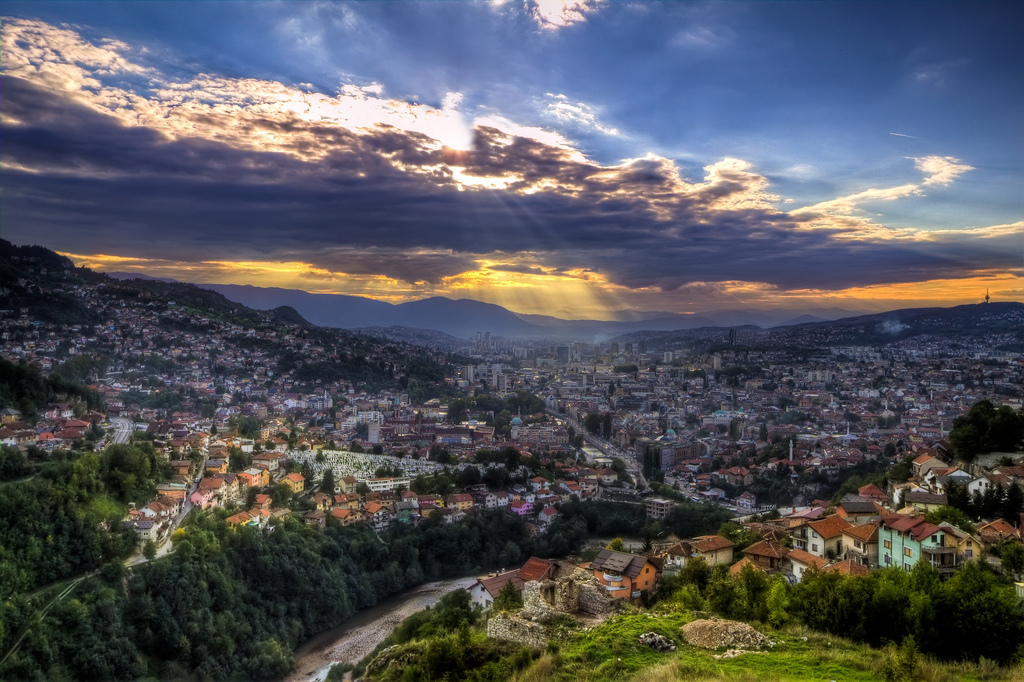
Lest this:

IMG_9127_5_6_tonemapped-3

…become this:

Sarajevo Post


Inappropriate Time and Motion

teacher-give-chance-to-students


Another piece cropped on the front page (Web) of the Globe and Mail yesterday about how teachers should be paid for performance rather than on seniority: I guess it had been too long since the Globe had taken a shot at teachers and at the public school system. Much of this grousing stems from the lack of desire on the part of those most endowed by out current economic system to pay for the enlightenment that should be the outcome of a thorough education for all, rather than just those students whose parents can afford to send them to Upper Canada College or Jean Brébeuf. It can also be the eagle stirring her nest, so that her young ones don’t get no rest (h/t Maria Muldaur for a 1974 recording of an old spiritual), meaning that we can’t let those fat-cat teachers get too comfortable.

Back in the early part of the last century, Frederick Winslow Taylor engaged in studies of industrial production, using time and motion studies as a way to building efficiency into the process of industrial production and refining the idea of measurable outcomes. It has become frequent practice to try to subject schools to the same process, usually by those who represent industrial output and who would like to defund the school system, or at least minimize it and bend it into a factory for productive labour. There are some flaws in the idea, and it’s interesting that the best debunking of the idea came from none other than Peter Senge at a conference in Victoria a dozen or so years ago. Senge was a business consultant and author whose ideas about changing business models found some favour in the late Ninties and early Oughts, but in this address to senior district administrators and ministry personnel, he had some choice thoughts for the gathering.


He compared schools to industrial concerns in terms of both input and output. In many production facilities, there are strict controls over the material on which the process is based, and material that doesn’t meet spec doesn’t get into the chain of production. All else is rejected. This, of course, doesn’t work well in a system of universal education, in which society undertakes to educate everyone’s children as opposed to selecting only the brightest and the best, or the most compliant, or the strongest, fastest, most adept.

Along the chain of industrial production, an enterprise will control as many factors as possible in the run-up to output so as to minimize deviation from spec and guarantee consistency of product at the end of the process. This is difficult for schools, given that the level of parenting will vary considerably, the presence of constructive/destructive influences outside the school system will vary widely, and the school system has call on the clientèle for only part of the day. During the other part, students are bombarded with images and messages as an incitement to consume and often actively encouraged by influences in the wider community to refrain from any exercise for their intellect. Unless there is serious intervention by the family or another agency, it is easy for any real education to stop at the school room door (the converse can also be true, where the dead air can happen in the classroom and where the student avails himself of opportunities outside of class to engage his faculties and pursue constructive interests, a necessary phenomenon when curriculum and delivery are dumbed down and strictly controlled within the school system). Again, in the industrial framework, any unit that doesn’t measure up along the production chain is simply flushed out of the system and ceases to be part of the responsibility of the organization. This is more difficult in the case of schools where the utmost effort must be made to retain all students in some part of the educational framework, lest they become part of the remediation/incarceration network.

Measurement of outcomes is difficult for schools. In the immediate aftermath of  public schooling, there are measures of how quickly students enter the job market or post-secondary education (and, eventually, the job market), as well as success at exit exams. These exams measure only a very limited and often mischosen set of outcomes and in a way that often means little or nothing. In the current economic climate, employment statistics are likely not going to be very good because of a dearth of real employment, particularly the jobs worthy of a career and where an exiting student might perceive the ability to build a life on the work on offer.

In addition, there is a serious quandary (not in some minds, I’m sure) about who determines whether a teacher is successful, about which teachers would deserve to be rewarded with merit pay and which teachers should be working for reduced salary because of shortcomings. A great deal  of personal preference and the arbitrary would be difficult to avoid. Fairness and justice in the distribution of benefit doesn’t seem to be one of society’s strong points, and the same can be said for a lot of individuals who have risen to positions of authority for reasons other than simple and demonstrated competence.

Finally, there is the matter of pay. Teachers will generally have spent five or six years learning their craft at university at their own expense. They will then spend eight to twelve years climbing up the salary scale until they reach their maximum. I would say that, by all means, we should remove the “seniority” clause: pay teachers the top salary from Day One. Teachers who are not competent need to be flushed out of the system if they can’t, given the opportunity, develop a series of processes and strategies that will result in success as an educator. But let’s also do the same with doctors, dentists, lawyers, judges, politicians, nurses, burger flippers, insurance sales people and the rest of the folks who toil on behalf of the general population. Teachers should do more of their training in the actual schools and should be paid to do that work, much as we do with apprentices in the trades and should access real salaries as soon as they get a position following successful completion of their training.

It is unfortunate that society has become so much a reflection of its industrial/consumer underpinnings: as a society, we are becoming increasingly unfit to judge the appropriateness of our institutions and incapable of bring the change to the institutions (as well as the creation of new or repurposed institutions) that the same society needs to thrive in the future. In the process of rebuilding our processes of education, a good first step might be the reform of the press and the cheap-shot journalism that produces screeds  such as the article that set off this whole rant.

Diplomacy

StevieBibi


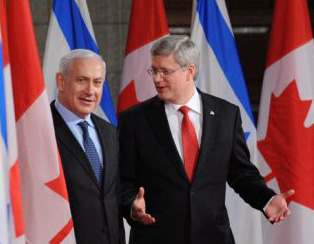
Our Dear Leader is off in Israel on a junket with dozens of people at taxpayers expense, off to once again swear undying allegiance to our favourite bullies. As a point of clarification, it bears stating that the part of Palestinian processes that involves suicide bombings and rocket barrages is wrong. However, the charade of Israel calling itself a victim as it continues to displace Palestinians, and the cynicism of holding the announcement of thousands of new settlement homes until after the departure of the American Secretary of State as well as the imbalance of military force in the region indicate that Israel is not, perhaps, the ideal state to hold up as a beacon of enlightenment and freedom as so often happens in the discourse of Harper, Baird and that lot. That Harper would offer the Palestinian Authority money to calm the waters speaks of either ignorance or goading as the gesture completely misses the point of a Palestinian state. It is likely, as is often seemingly the case, that the funds would be doled out by Israeli institutions, meaning that the bribe is also blackmail. If the Dear Leader wanted to be a real friend to the Israeli people, he might consider abandoning the blind loyalty to the current régime and support a viable peace process that would benefit both the Palestinians and the people of Israel.I seem to recall that a plan for such existed under the name Oslo Accords, but the process fell apart when Israel just kept on building settlements in land that was allocated to the Palestinians. That all happened twenty years ago, and the region looks no more peaceful now than it did in the run-up to the negotiations in Oslo.

CETA and the Home Gardener

seeds


Recent reports show that the European Union is considering legislation that would require all seeds for sale or trade to be of certified varieties only, with costs to certify being between $4 000 and $5 000 per variety. From my standpoint, this is another move to give corporate seedsmen, mostly owned by large chemical concerns, complete control over what gets planted and by whom. It fits right in with the philosophy of relegating environmental concerns to the background and letting wild fish stocks dwindle to the point where fish farms will control the seafood supply, and it fits in with the de facto privatization of water and power, as well as state policy around here that supports the fossil fuel incumbency. Should we be worried about what the EU is doing with seeds? Damn right, given that Canada, under the leadership of one Stephen Harper, has recently signed a free-trade treaty with the EU which would likely include provision for harmonization of agricultural policies of this nature. Measures of this nature would preclude organizations like Seeds of Diversity and the U.S. Seed Savers’ Exchange from doing what they have been doing to protect diversity in both production and gene plasm. It would likely pull the rug out from under small, independent seed houses, some of whom raise their own seed stock and many of whom rely on networks of small independent seed producers: none of these people would be able to afford the costs in both time and money to get their material homologated under the proposed regulations. Ho hum, just another turn of the CPC screw on the people whose interests the government of Canada is supposed to protect.


Innovasion

innovasion

CES has rolled around again. There is more new stuff over which to salivate in anticipation of your wallet being thoroughly hoovered, if such is your bent. In our house, we’ve managed to dodge the craze for mobile telephony and the constant contact of the tablet revolution. But the darling of the current geek set seems to be the drone: everyone wants to have some sort of flying contraption that totes a camera and either records or streams what gets captured by the lens. Who knows what else these things could tote around, but I had this sense when Joshua and I were out playing hockey in the driveway over the holidays, and when the neighbour’s new whirligig flew past, that we were witnessing another stake in the heart of the private self.

There is considerable space in the course of public discourse for the expression of what people consider important, and the fact that so much of what we choose to share is of such a trivial nature speaks to the debasement of human intelligence in and by  a culture centred on mass consumption and entertainment. The problem is compounded when we get our hands on gadgets that allow us to intrude beyond the point of voluntary sharing.

Further, that HD television you bought last year is now obsolete and must be upgraded to a 4k screen, and soon your drone will need to be a new model that will sync with your Google Glasses for direction by eye movement. This means that there will be new slag heaps of electronic junk that was always of dubious utility, but that now no longer functions either because it is no longer in fashion, or because there is little or no backwards compatibility built into any of it, and the underlying infrastructure or software no longer exists.

Isn’t this fun?

The Dark Ages

400px-Lorenzetti_amb.effect2


As a tadpole, I was taught that the period from the fall of Rome to the Renaissance was a time of ignorance occasioned by the loss of classical knowledge and a lack of inquiring spirit. It may not have been entirely so, but the very name of Dark Ages could occasion intellectual and emotional shivers, particularly in the context of the enlightened times in which we were living.

As I have looked progressively deeper into the wheels and levers that drive and direct our society, I am struck by the sheer volume of knowledge that we have developed in recent decades, as well as by a dearth of the wisdom to channel the use of said knowledge. In particular, recent developments at both the Federal and Provincial levels of administration lead me to believe that we have come to value ignorance and to reward avidity to the point of self-destruction. There is much talk out there about Harper’s war on knowledge and on those who seem able to draw coherent conclusions from the mounds of data.

The Galloping Beaver has this to say…

The House of Infamy opines…

Owen Gray at Northern Reflections muses…

And now there’s this business of Chuck Strahl moving out of the oversight of our security organizations directly into lobbying for Enbridge:


Laila…

RossK, the Gazetteer…


This move by Strahl is simply an admission of his advocacy all along, that he’s been working for Enbridge and not for the Canadian public, but using publicly-funded organizational framework for the benefit of a major corporation that, contrary to anything that the Environmental Review Panel may have said in this instance, does nothing in the public interest.

Honesty? Good management? Transparency? None of that from any political party that I can see (with the possible exception of the now-doubled Green caucus).


And, just for good measure, and because I like this stuff:


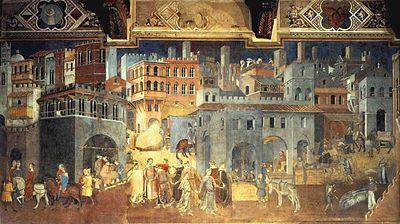
(The irony of the header image is that it’s title relates to the results of good government. Ha!)

Now The Fun Begins…

… and you’ll pay each of the teams for a ticket (at least if you’re wise).

(A big shout out to Dan Murphy, once of the Vancouver Province, now with Deep Rogue Ram, likely at least in part because his genius wasn’t welcome: it stated obvious and unpleasant truths.)

An item in the Globe and Mail from last night and this morning outlines how Ottawa (that is to say, our government) is preparing for the fight over the now-NEB-endorsed Northern Gateway pipeline. Those who have an inkling of the potential impact of this project, and others of the same ilk, as well as the drain it represents on the Canadian economy in favour of the international fossil fuel clique, will want to step up and throw something n the pot to ensure that it isn’t for lack of a dollar or two that we all get subjected to the degradation of the environment, the body politic, the real economy and the spirit that this project will represent.The sad part is that we will sure as hell be funding he Enbridge end of the fight, and, barring an election and a serious change of direction as well a government, we, the citizens of this once-fair land, will have no say in how deeply the government and its legions of lawyers and lobbyists will dip their oily hands in our collective pocket. Many of us have suspected since long before current revelations about CSEC doing industrial espionage in our name for the benefit of predatory mining and oil interests, that our elected government was very much in thrall to certain well-monied interest groups, but the current spate of moves on their behalf is so brazen as to defy any notion of conflict of interest. Not only to we pay exorbitant energy prices, we pay subsidies to entities that make huge profits and that are actively working to exacerbate the conditions that are likely to make our one planet uninhabitable. Makes great sense, does it not? When the long and largely abortive Treaty Process was at its height, there were many complaints about the money that taxpayers were furnishing to fight both sides of the case. In the true spirit of Catch-22, that user manual for modern society, we should expect that First Nations could have access to the same bottomless pit of legal tender offered to Enbridge, Kinder Morgan and the rest of their crew.

Exit the Postman

In the latest move in Canada Post’s drive to make itself totally irrelevant, the corporation has decided to end door-to-door delivery in cities. It is rapidly heading toward an existence akin to the rump of BC Rail, something of a holding company for what’s left of the assets that rightly belong to the citizens in general and which are very much in danger of being sold on the cheap to the friends of the government who bought off the politicians and now expect a rich return on their investment. This move is one of the purest expressions we’ve yet seen that the government exists not to serve the well-being of the electorate, but rather as a mechanism to move wealth from the lower and middle reaches of society to the investor class at the top of the increasingly steep economic pyramid. It is part of the bold and flagrant program of suppression of unions by the Harper government and a way of ensuring that the labour pool keeps expanding as the opportunities for work shrink, thereby ensuring a flow of cheap labour on the “open” market. And, with the disappearance of the letter carrier goes a wealth of cinematic and musical inspiration, thinking of items like “Please, Mr. Postman”, “Il Postino” and “The Postman Knocks Twice”.  Now I wonder if the price of a letter will decline…


And I can’t miss the opportunity to mark another sad exit, though it would be hard to argue that the man got cheated:


And a couple of longer items: