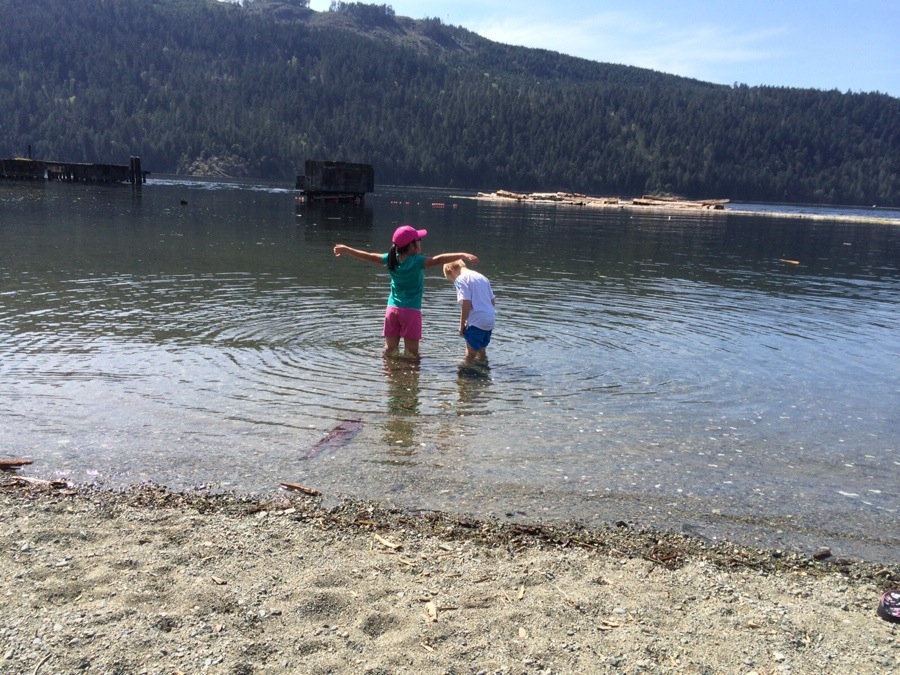
Lily

This was the centrepiece at a recent “Day Away” for religious women, specifically Baptists, I think, but the theme is common and speaks volumes to the immobility of religious organizations on the multiple and deadly crises confronting us. Taken to its extreme, it results in the End Times attitude of “bring on the apocalypse” because God will know his own and look after them.

There are pockets of constructive activity in the religious community, but, as with most initiatives for sensible economic and social policy, they never quite seem to hit the mainstream, often simply because they don’t conform to the social inertia of the current main stream of  (dare I call it…) thought.

nuns-on-the-bus-540px

(the picture links to the article)

But the lilies attitude might as well be the same outlook as the famous icon of North American culture:


AEN


There are also the crowd that goes well beyond a happy-faced m’enfoutisme (a lovely French term for I couldn’t give a f***-ism), as outlined in a letter recently posted by Cousin Bill in far-flung Vermont:

Men and Their Sacred Writs

I’m not a biblical scholar but there is a wonderful passage in Matthew called “The Woes of the Pharisees and Scribes,” in which Christ – the son of God in Christianity, and a revered prophet in Judaism and Islam – excoriates the leaders of the church and state for their sins. I’ve updated it somewhat:

Who are these feared and fearful patriarchs, these lawgivers, and porers over sacred texts?

… Middle-Eastern elders who find in sacred texts the right to sell their daughters in marriage to their friends and then to hunt them down and kill them when they flee in terror,

… African elders who find in tribal tradition the right to ensure their infant daughters never grow up to know the passion of their gender,

… modern day Scribes and Pharisees, who themselves survived the worst genocidal annihilations of the last century along with the Romany, gays, Poles, and Slavs – who then seek in their sacred texts the right to subjugate their women and daughters and to ensure their hegemony in lands and territories,

… popes, cardinals, and priests who debate “how many angels can dance on the head of a pin” and find in their sacred tomes a pretext for preventing women from dispensing sacraments or having their say in the perpetuation of the race, who in the face of poverty jealously hoard their wealth and, when confronted with their own sins of child sexual abuse, bury evidence,

… Christians who mine the Bible, a writ of other men, to justify hierarchies of race and gender and disguise their own terror of the full range of human sexuality,

… And the Supreme lawgivers of our nation whose male majority find in their “originalist interpretations” of our Constitution:

–  That money is now free speech, even if the result is that the rich can now drown out the voices of the poor,

–  That corporate enterprises of men are, in fact, men themselves and have the same rights, even though corporations are innately amoral and aspiritual, lacking intrinsic art or ethics,

–  That our emerging oligarchy, a concentration of power and wealth that those who wrote the Constitution strove to prevent in their nascent democracy, is now a good thing.

We must ask ourselves if Mohammed, Christ, Buddha, Jefferson, and Maimonides and the other prophets and freethinkers about whom men have written and argued since language and story began were here today, would they endorse such interpretations and find them the fulfillment of their hopes for mankind?

Who are these fearful men? And, I must ask myself, am I one of them?

We can choose to act based on a notion of what’s the right thing to do, and that can be a powerful motivator, but there are also those of us who have somewhat more selfish reasons to protect a viable and just society working toward some semblance of ecological harmony. These are my grandchildren, I want them to have  a chance at a reasonable life, and what I want for them, I want for all people.

JJCB

Disturbing Outlooks and Attitudes #1

Hoax


I used to argue back and forth a decade ago with a sometime colleague who was an ardent supporter of George W. Bush, with he usual outcome that we would agree to disagree. I have since drilled down a ways into the current and developing status of humankind on this planet, and the auguries are not auspicious, to say the least. I was not at all comforted when said gentleman asked me at a gathering last evening whether I was looking forward to once again engaging in the breaking of speed limits for thrills, something I once undertook regularly with great relish, but gave up when it finally dawned on me that being a carbon critic who stunted on back roads for fun was not a particularly good example for others to follow. I answered him in the negative without much comment at all and was a little taken aback when he pursued his line by telling me that humans had no control over the course of the unfolding of the universe and that our best hope for survival and for thriving as a species was to decamp to the farther corners of the known universe, and that he would therefore continue to burn up resources at as rapid a pace as possible for his own enjoyment. This falls right in line with the Bill Gates geoengineering crowd, a group who doesn’t seem to understand that our living systems are more complicated, interwoven and subtle than our engineering minds can fathom, and that a look back at our witting on other interventions in managing our living space looks like a bit of a chronicle of disaster: particularly without a significant attitude adjustment and the development of both deeper and broader questioning strategies, our past would point to abject failure, this time on a scale that would basically be guaranteeing that we would, in short order, be kissing our behinds good-bye, taking the vast majority of life on the planet with us. This outlook speaks to a willingness to do whatever it takes to protect a position of privilege, and, as with most conservatives/libertarians, any justification is good enough as long as it allows life to continue on without sacrifice of the least bit of personal freedom or economic clout. The sad part is that we’ve known for decades how to manage most of the crises that confront us: we have had solutions that involve very manageable levels of sacrifice, usually balanced by long-term gain in well-being and stability. How very sad.

Burn


Meanwhile, here are a couple of music videos that caught my eye:


Looks like Green, Spencer, Kirwan, McVie and Fleetwood. Interesting that all the guitars get a voice at the front.

Perhaps one of the greatest studies in how to grow old gracefully. I think Taj is the only North American, the rest being Brazilians. Particularly nice harp playing.

Sometimes Evil People Speak the Truth

Or parts of it, anyway.

KO

I had one of those nights where I woke up and made the mistake of having a thought, and with thoughts, as with potato chips, one leads to another. Soon, I had wads of things flitting between my ears, and it was clear that I wouldn’t get back to sleep until I logged some time with book and early morning television, normally a great soporific. I saw a report about how lotteries in Canada are suffering because their best clients (milk cows) are old and dying off and that the current generation of Millenials, those in the 18-34 age bracket, aren’t playing with the gusto of the older folks. Of course, my own reaction is that this is a wonderful phenomenon and that I don’t feel a great deal of sympathy for those who run the gambling establishment in this, or any, country. Then, this being CBC Newsworld, there had to be an expert attestation: their expert on all things economic, Kevin O’Leary, about as sterling an example of anti-social greedmongerning as could be had anywhere, a man whose sense of entitlement and self aggrandizement grates against every fibre of my being. His take? Essentially, good on the Millenials for sussing out that lotteries, like most forms of gambling (stocks, bonds and mutual funds excepted) are taxes on the stupid. I hated that I would agree with KO on anything, and his undercurrent of tax avoidance  sealed the deal: KO wants us to fail miserably to support each other, to go it alone as rugged individuals so that the already-advantaged can use their financial and political leverage to perpetuate a system of gross inequity (and iniquity). Of course, the stupid factor was on full display with reports of an event honouring the real participants in The Great Escape, not Americans, and not Steve McQueen ( and who knew that Hollywood might rearrange the substance of a story to fit their hero cult) and a replay, several days delayed, of a nun singing some r ‘n b tune on an Italian version of some reality show, something of which I would have remained blissfully unaware were it not for the inordinate amount of “news” coverage that such a non-event got. Newsworld, all entertainment, all the time. How can Nancy Wilson keep a straight face as she reads this stuff (she was, in this case, the designated deliverer of good news, a task at which she has much company, unfortunately).

Guaino


Then there is Henri Guaino, now an elected member of the French National Assembly and formerly a special advisor to former President Nicolas Sarkozy, who was invited to answer questions on a segment of a Paris morning show (Télématin) called Les Quatre Vérités, with the hot topic being the outcome of the first round of the municipal elections. His rightish UMP did well, the current central government of François Hollande did generally poorly and the real “winner” seems to be the National Front, whose populist thuggish nationalism seems to have become a safe harbour for a lot of the protest vote. Bless Guaino’s pointed and selfish little head, he was able to spot that not only were the Socialists being sanctioned, but the whole political class was taking something of a beating for their unfulfilled promises to improve life for the general citizenry in France. Guaino cited in particular the surrender of the levers of power to the EU and to the financial and corporate structure (this from an individual very much in the house of those entities). I didn’t hear any real solutions (the segment lasts all of ten minutes), but the implication is clear that democracy, when it gives over power to economic interests and bureaucracies, is in serious trouble. Who knew.

mdAs a cap to all this, Murray Dobbin had a piece published in The Tyee this morning about big ideas and why the New Democrats seem to have lost some of their luster as they get more enthused about the idea of possibly forming a government (dream on!) and move toward the centre to attempt to capture that vote. In the end, the election of an NDP government might look more like a Pierre Trudeau government of the late Sixties than a real solution to the economic, environmental and social ills that beset us, so that the Dippers would have gained power, but would be unlikely to be able, or willing, to undertake the renewal that would lead us to a more just and equitable society.


Every Once In Awhile

I like to revisit this ditty that often used to start off my week, a) because it’s about Monday mornings, and b) because it does have a tendency to engage the movement instincts (and really did when I was 17 or 18). The whole album is a masterpiece, and part of its charm comes from the meddling of Sam Charters, I suspect, who seems to have wanted to tone down some of Buddy Guy’s edgy and unbridled approach to playing: it’s not typical BG, but the restraint works well.

Of course, this misses the great news about the Oscars, the Heritage Classic and the end of the world, wherein Obama says to Putin: “I dog double dare you.” Putin says nothing, just goes ahead and deploys the troops. Well, what did you expect, Barry. Once again, an honest yearning for more local control and a better life has been hijacked by a group of local National Socialist types and reinforced by “diplomacy” from the EU and NATO. Ianukovitch and his lot should be gone, but when John Baird hies himself off to congratulate the newly installed administration (just who is it that rushes in?), you have to wonder which of the big miners is staking a claim. It’s what Canadians do. Again, rather like Assad in Syria, al-Sisi in Egypt, and whoever is running the show in Libya. Tunisia seems to be evolving, but who knows what goes on behind the scenes? Venezuela and Thailand are also targets for the “spokespeople” of the investor class, it would seem.


And, of course, this one always comes back:


Encore Redux

Yes, it’s like déjà vu all over again.


gc


Again, Gail Shea does the bidding of the Norwegians:


herring_venus


(Got this from the Powell River Pesuader)

Against the advise of her own DFO people and First Nations biologists and decision makers, Shea wanted to open up the West Coast of Vancouver Island and Haida Gwaii for herring roe fisheries. Her advice from other stakeholders was that there might be enough fish to justify a commercial opening, but that said opening might threaten the long-term stability of the herring population. This would open the possibility of a cod-like collapse in the herring population, something with which Shea ought to be quite familiar in her home turf: it would deprive First Nations of ceremonial and food fish (thereby degrading their cultural heritage as well as a source of healthful food), and would knock out one of the pillars of the survival of wild salmon. Of course, this would make a nice complement to expansion of net-pen fish farming on the coast as well as the increased support that taxpayers have been forced to give to an industry that operates against the interests of said taxpayers. It’s all part and parcel of a policy line that removes citizen control and access to what ought to he resources held and managed in common, and a good reason to choke on Shea’s title of Honourable Minister of Fisheries and Oceans.

We Need To Do More Science (mild Irony)

gc


This is The Honourable Gail Shea, Minister of Fisheries and Oceans, Government of Canada, loyal Conservative and Harperite.

She was speaking at the Pacific Biological Station in Nanaimo yesterday on the addition of $54 million in research grants to the station’s budget, which really ought to be an expenditure to bring joy to our hearts. In support of the grant, Shea emphasized the need for the country to carry on additional scientific research on fisheries, and that certainly ought to be the case.

CTVVI News Report

Nanaimo Daily News Article

Problem number one with her grant is that it is directed solely at the expansion of aquaculture, specifically open-water aquaculture, of both shellfish and fin fish. The government’s program is clearly to support an industry that is largely controlled from beyond Canada’s borders and which, to say it mildly, is not without controversy. This grant will do nothing to lessen that controversy in that there are certain foregone conclusions inherent in the grant, those being that farmed fish are better for the economy than wild fish and that we should be fully invested as a people in net cage open water fish farming.

The first bit of irony lies in Shea’s statements that we need to do more science, this from a minister of a government that shuts down scientific libraries in the interest, on the face of it, of saving a rather paltry pittance in tax dollars. Shea chooses to ignore serious science in the public interest that indicated pretty strongly that fish farming, as it is currently practiced, harms habitat for a wide variety of sea life and threatens stocks of wild fish. The DFO has repeatedly rejected any results from any lab linking fish farming to the propagation of fish-borne viruses sea lice. This, of course, is very convenient for a couple of reasons, one being that it obviates the need for fish farming operations to be moved to dry land, and, secondly and of greater interest to the citizens of Canada, it allows for the degradation at least, and the disappearance at worst, of wild stocks. The degradation/disappearance of wild resources has a couple of benefits for the supporters of the Harper political/economic agenda: it turns the resource into a controlled commodity rather than a part of the biosphere to which all stakeholders have some access, and it removes the need to protect vast areas that have traditionally been protected as part of the salmon spawning régime, removing a significant set of obstacles for resource extraction. The science Shea wishes to pursue is the science of the foregone conclusion, that operates on the principle of perpetuating an ideological goal rather than discovering what all the implications are of the action contemplated.

My own sense is that the reports linked above both demonstrated another part of the tilted equation in that they tend to accept with little question the premise behind Shea’s announcement rather than giving sufficient time, space and credence to a well-documented alternative point of view. This wouldn’t be so much of a problem if so many people weren’t convinced that CVVI and the Nanaimo Daily News, along with the preponderance of the press organs, speak with the force of deep and broad knowledge. They don’t, they are press release channels.

Hence, the following quip from Woody Guthrie:

“I’d rather have the devil running my country than the screwbally bunch we got in most of our offices these days.”

Meanwhile, here’s a little object lesson from Delbert McClinton:

Competition

FreutschBags


Patronats français et allemands réclament un pacte de compétitivité européen

French and German Business Leaders seek an agreement on European competitivity

I suspect that competitivity is a word made up to describe the competitive nature of an economic unit in terms of labour costs, relative costs of inputs, costs relating to taxes and legal impediments to production and other assorted sticks that get stuck in the spokes of those wishing to make money. I have only heard (seen) it in French media, although I do seem to recall hearing competitiveness around these parts.

In France they have an organization called the Medef, whose equivalent in Germany is the BDI, a group made up of the representatives of the largest business concerns. Much of what they do is to lobby their respective governments on policy matters that affect their ability to do business in as unfettered a manner as possible.This event is like a mini-Davos, and, like Davos, they forgot to send me an invitation.

It isn’t that there aren’t political parties that clearly represent the interests of business and the people who live at that end of the economic spectrum: parties that actually represent the interests of working people are few and considered somewhat on the fringe of the political spectrum: France currently has a Socialist government that gets more of its policies from the Washington Consensus than from any serious socialist theory, a party that has gone the way of Tony Blair’s Labour Party and the Democratic Party in the US.

When these two organizations get together to discuss the competitive nature of business and government policy, we can be sure that they are less interested in competition than in ensuring that wages and benefits, environmental regulations and energy considerations are likely to be diverted to the benefit of the members of their respective organizations and will have little to do with the well-being of either of the countries in question, or of the European Union. Their idea of being competitive is paying workers on a Chinese or Bangladeshi scale, eliminating pensions and sick leave and defunding as much of the social safety net as possible. It begins to look a lot like a cartel.

If you wonder why there are so many strikes in France, in Italy, in Greece, Spain and  Portugal, this has something to do with it. François Hollande, as a candidate, was full of much of the same rhetoric as Obama the candidate. As presidents, they have turned out to be straw men for the commercial class and toxic to the interests of the greater population. The real wonder is that we don’t have more unrest here in North America.

(Original article tom Liberation.fr)

Choice, No Choice

croatia-split

As a teen, I got dragged off to Europe, by my parents, for a number of reasons. Some of it was, I think, tied to the idea that the California way of living at the time (1966) was a bit of a gilded cage, and that the offspring could use a little perspective. This was not done lightly, and may have had a note of seeking refuge from the American commercial juggernaut. Whatever it was, there was a particularly interesting interlude of about a month when we crossed the border at Trieste into a (drumroll and dire music) Communist country, the Yugoslavia of the day. Tito’s Yugoslavia was something of a renegade in that there was some leeway for personal and community initiative and where parts of the country were more of a transitional zone between communist and capitalist parts of the world. There was a lot of tourist infrastructure, particularly along the Dalmatian Coast, with evidence that more was in the offing. By Western standards, it was insanely cheap, somewhat frugal, but the beauty of the place and the general warmth of the welcome lent some magic to pretty much the entirety of the month-long sojourn.

Most of our travel was in Croatia, with forays into Bosnia-Herzegovina and Slovenia. We never got into Serbia at all, but these divisions appeared less political and more ethnic and culture at the time, particularly to an outsider who didn’t speak any of the local languages. Encounters with locals rarely veered into the realm of politics or government: it was clear that people were not encouraged to debate the merits of Tito’s rule.

Mostar, when I was there, looked something like this:

Mostar

Mostar, in the midst of the post-Tito dismantling, looked something like this:
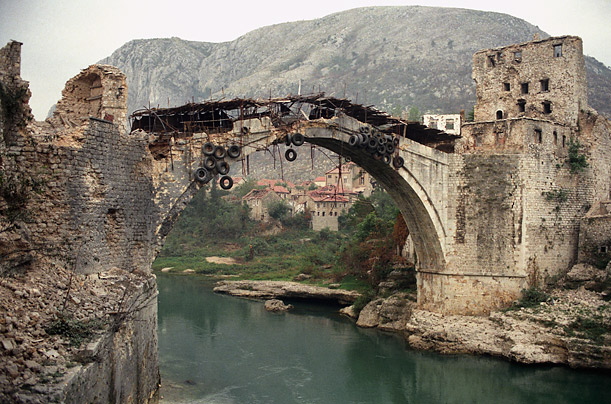
 

Tank Cannon Remodelling

Tank Cannon Remodelling

The horrors of the struggles in Bosnia, in Croatia and, eventually in Serbia are well-documented and a bit of a cautionary tale on what a combination of history, religion and ideology can unleash on entire populations. this was clearly a conflict where insanity prevailed and where there were no good choices, or at least the good choices never made it to the decision-making process.

It has often occurred to me over the last years, particularly in the wake of the Arab Spring, that it is often the case that what might be better choices are often not considered, and this fits in well with a current of thought stating that it would be mistaken to think that those who govern do so in the broader interest of the governed. Egypt seems torn between two utterly blind alleys, Libya is a total basket case and a cauldron of conflict, and Syrians, either wittingly or otherwise, have put themselves into the jaws of a vise where neither side presents anything other than repression and misery. The addition of meddling by Iran, by the Saudi clique, and by the Western clique only exacerbates the problem, prolonging the conflict and muddying the possibilities for resolution. Almost all the principals in these struggles are bad actors, often representing monied interests who are more interested in a dominant business model than in the resolution of a bloody and terrifying conflict. Assad is a bad actor, Morsi is a bad actor, Al-Sisi is a bad actor, Obama and the House of Saud are bad actors, as are the Mullahs in Iran and a host of other smaller fractious players working at the destruction of civilization.

Such also appears to be the case in the Ukraine, where factions aspiring to EU membership are in barely restrained warfare with other factions cleaving to old connections with Russia. No one speaks of a possible other course, favouring neither one not the other. The EU is a monster bureaucracy and an instrument of global capital. Russia is a bastion of corrupt dictatorship with some of the trappings of democracy: neither seems like a model that any sane person would want to emulate or with whom one would want to form close ties, and there may be good reason why the choice to not align never gets heard. As was the case with the original Orange Revolution (also the Rose Revolution in Georgia), there have been serious incursions of outside influence. Isn’t it stunning to hear Stephen Harper decry the lack of democracy in the Ukraine while he works actively to subvert and destroy what little is left of our representative parliamentary system here at home?

In an article published yesterday at CounterPunch (thanks to Murray Dobbin for circulating it), Eric Draitser puts the current situation in the Ukraine into perspective, enumerating the moves to co-opt a peaceful protest and escalate to violence and possible civil war. The Timoshenko/Ianukovich cleavage is well documented and, while presented as a battle of ideologies, it often looks more like a war of factions looking for dominant privilege. The only question left should be as to how to limit the damage done by both outside influences and by those in thrall to those influences, and then the consideration of whether, rather than choosing between Russia and EU, it might be of greater benefit in the long run to remain unaligned, where the best choice, given what’s on the table, is no choice at all.

Draitser’s article is well worth a read, both for what it says about Ukraine’s struggles, those of the Arab World, Greece, Italy, the EU, but also for lessons to be extracted in relation to governance slower to home.

Lest this:
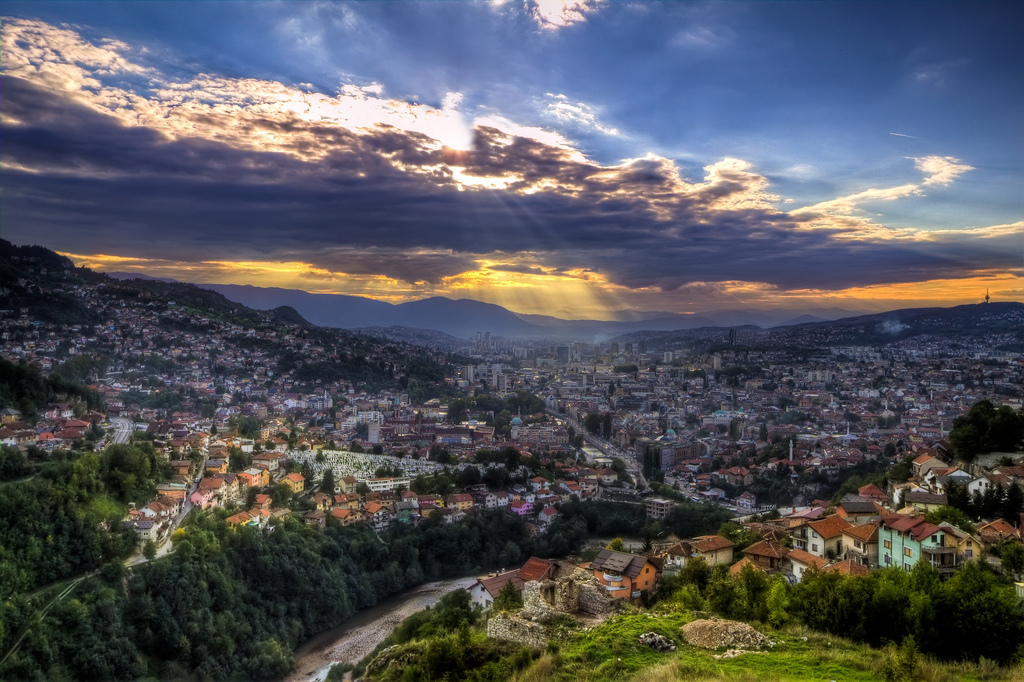
IMG_9127_5_6_tonemapped-3

…become this:

Sarajevo Post


CETA and the Home Gardener

seeds


Recent reports show that the European Union is considering legislation that would require all seeds for sale or trade to be of certified varieties only, with costs to certify being between $4 000 and $5 000 per variety. From my standpoint, this is another move to give corporate seedsmen, mostly owned by large chemical concerns, complete control over what gets planted and by whom. It fits right in with the philosophy of relegating environmental concerns to the background and letting wild fish stocks dwindle to the point where fish farms will control the seafood supply, and it fits in with the de facto privatization of water and power, as well as state policy around here that supports the fossil fuel incumbency. Should we be worried about what the EU is doing with seeds? Damn right, given that Canada, under the leadership of one Stephen Harper, has recently signed a free-trade treaty with the EU which would likely include provision for harmonization of agricultural policies of this nature. Measures of this nature would preclude organizations like Seeds of Diversity and the U.S. Seed Savers’ Exchange from doing what they have been doing to protect diversity in both production and gene plasm. It would likely pull the rug out from under small, independent seed houses, some of whom raise their own seed stock and many of whom rely on networks of small independent seed producers: none of these people would be able to afford the costs in both time and money to get their material homologated under the proposed regulations. Ho hum, just another turn of the CPC screw on the people whose interests the government of Canada is supposed to protect.


The Dark Ages

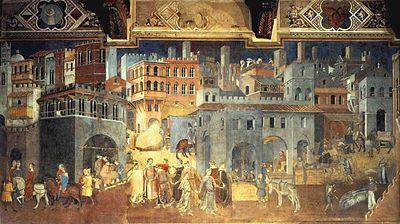
400px-Lorenzetti_amb.effect2


As a tadpole, I was taught that the period from the fall of Rome to the Renaissance was a time of ignorance occasioned by the loss of classical knowledge and a lack of inquiring spirit. It may not have been entirely so, but the very name of Dark Ages could occasion intellectual and emotional shivers, particularly in the context of the enlightened times in which we were living.

As I have looked progressively deeper into the wheels and levers that drive and direct our society, I am struck by the sheer volume of knowledge that we have developed in recent decades, as well as by a dearth of the wisdom to channel the use of said knowledge. In particular, recent developments at both the Federal and Provincial levels of administration lead me to believe that we have come to value ignorance and to reward avidity to the point of self-destruction. There is much talk out there about Harper’s war on knowledge and on those who seem able to draw coherent conclusions from the mounds of data.

The Galloping Beaver has this to say…

The House of Infamy opines…

Owen Gray at Northern Reflections muses…

And now there’s this business of Chuck Strahl moving out of the oversight of our security organizations directly into lobbying for Enbridge:


Laila…

RossK, the Gazetteer…


This move by Strahl is simply an admission of his advocacy all along, that he’s been working for Enbridge and not for the Canadian public, but using publicly-funded organizational framework for the benefit of a major corporation that, contrary to anything that the Environmental Review Panel may have said in this instance, does nothing in the public interest.

Honesty? Good management? Transparency? None of that from any political party that I can see (with the possible exception of the now-doubled Green caucus).


And, just for good measure, and because I like this stuff:


(The irony of the header image is that it’s title relates to the results of good government. Ha!)