Elections where held yesterday in Belarus. in which the incumbent, Lukashenko, managed, to no one’s surprise. to win a fifth term in office, per Libération, who bring the whole thing up because, in what they term a political decision, the EU has decided to lift any sanctions against Belarus because the elections seemed to go off without a hitch. This begs a couple of questions, the first of which is the concern that caused the EU to impose the sanctions in the first place, and the second of which is the haste with which the sanctions were lifted.
There has been much concern that Lukashenko’s elections have been somewhat tainted. There has been major upset in the past, I believe, and there was concern that a pattern of disruptive behaviour might repeat itself. For now, those fears are quelled, but did Lukashenko win the election fairly? This seems to have suddenly become less of a concern, and causes one to contemplate the second question, that of the quick change of heart.
Look at the map and ponder who is Belarus’s eastern neighbour. Then do the same for the southern neighbour. Do the names Putin and Potroshenko come to mind?
The EU may have started off as a project to end conflict in the area and to build an integrated and fair economy for all EU participants, but they certainly seem to have strayed from what was once their central vision.
And, yes, I have concerns about a certain more local Prime Minister who is in search of a fifth mandate and who has already, under the Orwellian Fair Elections Act, done at least part of his level best to tilt the playing field.
I went on social media this morning with the intention of, amongst other things, posting notice of a local meeting to investigate sponsorship of a refugee family, but found that there is something that really rankles about the idea. I’m an immigrant to Canada, and my forebears were immigrants from Germany and Ireland, some political and some economic refugees, and all this shuffling around has worked out pretty well for our lot, as well as for the receiving countries. Truth be known, everything I read indicates that it has worked out a damn sight better for us than for the original inhabitants of this land, and for many who haven’t been as successful at navigating the shoals of hostile economies and social situations as we have been. Much of this, both success and failure, can be ascribed to dumb luck, with Dame Fortune smiling on some and throwing stones at many more. A good deal more can be ascribed to the mean-spirited and short-sighted policy environment that has enveloped us in the last four or five decades and has (and continues to) caused disasters and misery abroad, discrimination and disparity at home.
My own sense is that there is a great need for rewriting our social and economic playbook, and that the care of our living space needs to be at the top of the list of priorities, and that charity is a band-aid on the festering sores of environmental degradation and the economic imbalance that produces poverty and homelessness, hunger, exposure and violence. As I suspect the case might be with many others who have avoided these pitfalls, we are charitable, but have the feeling that we could donate our way into our own poverty, and that it would make little difference in the overall scheme as those who have sequestered the great wealth of society in their own pockets would only deepen their own pockets of absorb the new donations without it making a whit of difference to the indigent. I reserve a special space in hell for people who fatten on the outpourings of charitable donations as part of the Charity Industry: it might be a good gig economically, but it’s morally indefensible. It’s also an excuse to let governments continue to funnel funds to their cronies and shirk responsibility to citizens for protecting our common living space, both physical and social.
Let’s accept refugees, welcome them with open arms and all the love and support we can muster. We have done much to create the conditions that forced them out of their former lives, so let’s try to make up part of it by ensuring that they have a better life here. At the same time, we here in Canada have a core of disenfranchised citizens, our own cadre of internally displaced persons, victims of whatever combination of toxic social circumstances and bad decisions by whomever. We can do better at looking after “our own” as well as taking in some “outsiders”, in the spirit of Gilles Vigneault’s Mon Pays:
De ce grand pays solitaire je crie avant que de me taire A tous les hommes de la terre ma maison c’est votre maison Entre mes quatre murs de glace je mets mon temps et mon espace А prйparer le feu, la place pour les humains de l’horizon Et les humains sont de ma race
(Basically, my house is your house, and all humans are of my race.)
Fairness doesn’t always dictate that everyone get the same treatment, but it ought to mean that no one goes without the necessities of life, including participation in society in economic, intellectual and spiritual dimensions, and full opportunity to improve the living situation, as long as it isn’t at the expense of others. So let’s sponsor both refugees from abroad and our own internal refugees. And let’s work toward a better economic and social balance at home, and quit blowing stuff up elsewhere.
I have an arts degree, specifically a major in French (primarily literature) with a minor in history (see Gary Larson’s comment above). Throughout my existence, I’ve seen references to people who do studies in the Humanities teased about the uselessness and frivolity of studies in this vein, and have disagreed somewhat vehemently on the basis of a perception that there is a major difference between education and training, and that the job that pays the bills is not necessarily the only focus of a person’s life. I was one of the fortunate folk who managed to find a career with my unmarketable skill: teaching kept me gainfully occupied for three decades, paying not only the bills, but providing a wealth of experiences for me to mull over looking at the interface between the Humanities and life in a logging town. Over the course of that career, I was able to maintain and pass along a sense of a broader perspective, one version of a vision where we might be capable of encompassing more than the simple generation of income and the dispersal thereof, a sense that there is more to see and do than just weather the Monday-to-Friday grind and the acquisition of a new truck. I learned that I ought not perhaps to be too judgmental about the relative merits of the various visions we all bring to the conversation, but work to see other people’s visions and to share my own as one of many. There were earlier iterations of this view that I was able to bring to the many other jobs I did before settling into the ongoing upheavals of a teaching career as well as to the upbringing of a couple of step children and some resultant grandfathering in which I presently engage, and I’ve always found it rewarding to encounter millwrights, engineers, fallers, plumbers, people of all stripes of careers, who have some version of breadth of vision, some through formal education, some through a simple personal propensity to question and read broadly.
The above video sums up much of my worries about how we view education and the resultant disdain for anything that isn’t of immediate utility in the workplace. This “know-nothing” treatment of learning leads potentially to the loss of perspective and knowledge akin to the destruction of ancient artifacts by religious extremists, people who will not tolerate parallel and sometimes conflicting world views, and where tolerance wilts, civilization follows. In part because of a lack of care and attention to our collective cultural treasury, this is where we appear to be headed, that is, to a society that isn’t social and a civilization that isn’t civilized.
This all came up because of a tweet from Alain de Botton, retweeted by Greg Blanchette.
One red light going off when Steelhead started working with Huu-Ay-Aht on an LNG port at Sarita Bay, old (at least in spirit) white guys from Howe Street (or wherever) promoting a get-rich-quick scheme likely to utterly destroy most everything in its path, and lots of folks, including some (really) old white guys feel really uncomfortable pointing out the pitfalls to people plundered by their Wall Street culture, just the sense that there’s a scam at work here, one that fits in well with the kind of hucksterism that characterizes everything that has come out of Victoria/Ottawa in the last fifteen years.
Now double the trepidation as a project of similar nature is brought forward by the Malahat First Nation in cahoots with the very same Steelhead crowd: this reminds me of the smelter proposition that kicked around these parts, studies paid and plagiarized, not a snowball’s chance of ever happening and the air of scam all about. According to reports in media (OK, I don’t trust them either) there was a missing detail with the Malahat crowd in that they don’t seem to have consulted with their membership, kinda à la NEB.
Given the general seeming acceptance of Victoria’s LNG ploy at face value, it looks as though a lot of people are set up to lose a lot of face in the whole deal. Sad.
Got a tweet from Chrisale about an article from Andrew Coyne in the NatPost, had a look and sent back a message about how fawning it was over PMSH. Was informed that it was tongue-firmly-buried-in-Cheek style, something I can usually sense right away, but I’m afraid that, as I pointed out in the next round of the exchange, there was such a long history of Coyne being an apologist for all that the current régime has done that it never occurred to me that he might have slipped quietly off the bandwagon. In a rather mild way, this is something that really grinds my gears, where a series of lies comes to light and all of a sudden there are crowds of rats crawling down hawsers or looking for PFDs, but for a decade, there have been omnibus bills, trade agreements that are more litanies of corporate capitulation than anything to do with a layman’s definition of trade, cones of silence enforced around any knowledge that runs contrary to what dear leader perceives to be his best interest, attempts to subvert the constitution, cheating on elections, creating a police state and garnering a succession of the best-deserved awards for climate troll (he might get a run from his friend Tony Abbott of late), and political panels have consistently avoided discussions of the glaring incidents of predation by the Harper crowd.
Over the years, I’ve taught myself not to gloat when I’m on the winning side, and that’s been pretty easy, given that I haven’t often (in politics anyway) been on the winning side, what with a succession of administrations having turned out to be abusive of the commons and of those who most must depend on some form of mutual aid. Mulroney was a disaster, but Chrétien immediately broke with all he had promised and turned out to be pretty much as abusive as Mulroney and just as corrupt and dishonest. Ditto for Paul Martin, though the expectations were pretty low, given his long track record in Finance, but all of the aforementioned must be polishing up their halos for that moment when they stand next to Harper in judgement. The sore loser part, and my attempts not to engage in sour grapes, are rooted not so much in what I see as bad policy being foisted on the citizenry as it is a sense that little or none of this would be allowed to happen were people aware of it, hence the thorough dislike of, and lack of respect for, dear leader and his henches, as well as those who sang his praises throughout the run-up to the current campaign. Foremost among this crowd would be Mr. Coyne, and a plea of ignorance would somehow mirror Mr. Harper’s denials of knowledge of cheques to Mr. Duffy. My sense, for all that I disagree with what Mr. Coyne stands for, is that he is well-versed in his subject matter and an experienced and astute observer of political and social behaviour and would have had thorough knowledge of the Harper Current in public affairs.
Nonetheless, as a not-too-sore loser, I salute Mr. Coyne with a resounding face-palm: I missed it. I would also welcome any and all, of all political stripes, who slide off the ship of fools that is the Harper régime and join the rest of us swimming in our little sea of uncertainty.
One of those sad moments in our parliament’s long and tattered history of miscues and snafus: Lisa Raitt ushering Elizabeth May away from the microphone in mid-tirade at a press dinner. “It’s all right dearie, perhaps a touch too much claret, overwork, whatever, but we ought not to spoil the evening with such vile venting!” First problem: it all made complete sense to anyone who had been paying attention to the direction of the legislative body in this fine country. It was unfortunate that, as presented anyway, it did come off as a bit of a rant and not the coherent and incisive discourse for which May is generally known. When the dust settled, it seemed as though Raitt’s intervention was that of a friend and that everyone in Parliament, though there might be serious disagreements on issues of policy, is an upstanding member of the Canadian citizenry and the human race.
Hogwash.
Now McLean’s has a piece that Mulcair turned down a position as an adviser to the current Conservative lot because they wouldn’t offer him enough money, Mulcair fires back that he declined because of differences of opinion on policy. Why was this a consideration at all? Harper was already firmly in control of the CPC and everything in his background screamed aggressive corporate takeover, a a lack of recognition on that front constitutes a serious lack of awareness if not moral flaccidity.
The idea that these clowns are all worthy souls and members in good standing of the League of Elected Good Folk just doesn’t stand up to scrutiny. Many of us have close associates with whom we maintain civil and friendly relations, but there is a personal honesty and integrity that goes with the package, and there are so many in the Ottawa caucus of the LEGF who seemed to have missed that memo (please see, for starters Perps With Perks #17 in full knowledge that the blue men have no corner on the misdeed market, despite the rush of the current CPC crowd to cash in at the public trough).
How bad is it? The local branch of the library found me a copy of Michael Harris’ Party of One. It took months to get around to me, and the book is still in demand, seemingly, as there is a sticker on the front limiting the loan to two weeks without possibility of renewal. I read a chapter and put it down, not because it isn’t a splendid book or that the narrative is anything less than detailed, perceptive and gripping, but because I’ve already lived through this and followed it in all its sad and tawdry details. Hence, it seemed a good idea to let someone else anguish over the book.
I’m taking a day off from a lot of the engagement to spend that day in the best of the Voltairean traditions, cultivating my garden.
Happy Canada Day!
Addendum: My garden (and most everything else) partner with some Voltairesque lettuces…
So all people can now get married and enjoy the responsibilities and benefits that our society accords to people who settle into a domestic union. Like interracial couples, LGBTQ folk should now have access to what the rest of us have enjoyed in terms of societal recognition. community acceptance and tangible benefits over the span of recent history.
So here is Nancy Pelosi, House Minority Leader, celebrating Pride and the Supreme Court Ruling that says that people ought not suffer discrimination based on sexual orientation.
Problem is that a raft of Democrats then climbed on board the TPP Fast Track wagon, expediting the adoption of yet another treaty that has less to do with real trade than it does with ensuring corporate rights to make profits before all other considerations, including human health, the environment, and the democratically expressed will of the people of the U.S. Lest we feel smug, we need to remember that Canada wasn’t originally scheduled to be included in the TPP, but Stephen Harper whined and complained loudly and long enough that the rest of the guys gave up and allowed him into the club. Negotiations have been held in the most strict of secrecy and only small parts of the treaty have leaked out, but we can say with a degree of certainty that the section on investor-state relations, the Chapter 11 of this monster, is the key and basically enables malcontents in the corporate world to sue the rest of us for profits they think they might have accrued had laws not been passed to insert sticks into their spokes. I believe it also allows the suits to override whatever restraints any jurisdiction within the signatory countries might put on unbridled greed.Note that these cases are heard by (again) secret trade tribunals set up by the corporations themselves.
In effect, your vote doesn’t really mean anything any longer, unless you and any democratic pals you have can fly under the corporate radar. I don’t quite know how that could happen with the increased surveillance that seems to happen all over both the corporate and government sectors, sectors which seem to be closer to a complete merger with each passing bit of legislation.
So to all the LGBTQ folk, welcome to equality, but you’ve picked a bad time to win this equality, because it means that you will basically earn the same exploitation as the rest of us.
(In all fairness to Ms. Pelosi, I believe she voted against Fast Track in the House, but her friend Diane Feinstein voted for it in the Senate, so it seems that there is unlikely to be any public debate on this corrosive corporate dreck.)
I signed a petition today in what will likely be a vain effort to forestall the construction in a prominent location in Ottawa of a monument to the victims of communism. Even though that brief interval and the energy of a few keystrokes may have been wasted, it is a fine jumping-off point for some reflection on ideology and the ideological underpinnings of régimes and their resulting misdeeds.
The motivation behind the monument, along with the scale and placement of the structure amounts to a dishonest pandering to one or more constituencies being curried for votes and financial consideration and perhaps to a lasting sign of the Harper legacy of eschewing any real diplomacy for supporting the side that best suits his own ideological and religious bent. Ideologies, like guns, don’t kill people, but, also like gun, if you leave one lying around, there’s a pretty good chance that someone will pick it up and use it for his own ends, likely in the service of coercion. In this, communism has certainly been the backdrop for millions of victims, but let’s not mistake what we called the Communist Bloc for communism: the USSR and its satellites were tyrannic dictatorships that spouted communist rhetoric as they exacted vengeful exactions indiscriminately on their own people and on those who had the great misfortune to fall under the extended Soviet influence. Do other ideologies have a tally on the victim slate? I would think so, even in something so “innocent” as the British/American strategy during the Second World War of delaying direct engagement with Axis forces in Europe until the Russians (note: Russians, communists and otherwise) had essentially absorbed the worst punishment that the Third Reich could hand out and turned the tide against the Nazi menace. Under the occupation, sympathetic factions arose in almost all countries to carry out many of the worst atrocities attributed to the Nazis, using National Socialism as a screen behind which to shelter the murdering, rapine and thievery that was at the heart of the matter, without regard to some ideological justification. And when the tide went the other way, there was more of the same, but from the other side, and pretty much without regard to any opposing or replacement ideology. The story of Alexander Solzhenitsyn is instructive, a seemingly loyal artillery officer who, at then end of the Great War, was gifted a dozen years in the gulags, demonstrating that Stalin et al were equal opportunity oppressors.
On the other hand there is the purported antithesis of communism, capitalism, whose record contains a litany of the same horrors perpetrated by the Stalinists. In theory, it is a perversion of capitalism for personal gain that lies at the root of the crimes, and that puts capitalism in exactly the same category as communism. It’s interesting to note that Mussolini characterized fascism as the marriage of capitalism and state power. This sounds vaguely familiar:
Let’s add Pan-Slavism and Zionism, the Greater Asiatic Co-Operation Sphere, The White Man’s Burden, the Greek, Roman, Egyptian, Aztec and Incan empires to the list of ideas that have wrought great deeds (their own definition) and left great works as monuments to their superiority (yikes, do the world’s great religions get caught up in the net?). So really, to be fair (not something for which the Harperites are really known), each of these ideas should have a memorial erected to the memory of its victims, and, given that real estate in Ottawa is at a bit of a premium, we could do these memorials as scale models of the great works such as that planned for the victims of communism, and house them all in a single building.We could then call it The Museum of Civilization.
This is a revolutionary act, telling the money to walk because it maters not where the environment and culture are concerned. Too bad it took the rest of us so long to figure out that those First Nations we beat up so badly might have had the right idea in the first place and that Wal-Mart doesn’t wash when the devastation hits.
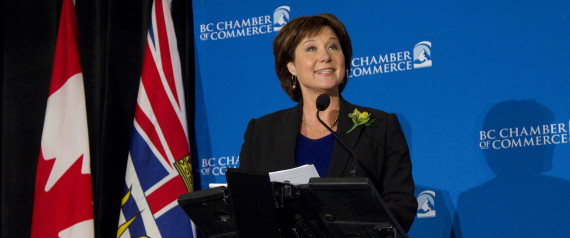
How ironic, the Clarkish one in the rôle of teacher. Ms. Clark has come up with another doozy in the wake of the Notley election in Alberta, to the effect that she has a lot to teach Alberta about carbon and climate change, and that, in fact, she has much to teach the rest of the country. Presumably this is because we have a carbon tax and they don’t, but she fails to mention that the carbon tax was a ploy by her predecessor to hog tie Carole James, making her either agree with the rampaging Liberals, or gainsay them in a move that would alienate her from voters in the greener shades of the spectrum, politics pure and simple. Herself hasn’t helped to redefine BC as anything other than a carbon furnace with the continued shenanigans related to the Pacific Carbon Trust, to dedicating agricultural land to carbon offset projects, and mostly her giveaway support of the gas industry, particularly the fracking end of it.. Her government has consistently missed opportunities to support alternative energy, despite indications that wind, solar, tidal and geothermal energy all hold great promise. She is an object lesson in what not to do, even as she waggles her finger at the rest of the country from the standpoint of someone who, without any reasonable explanation, seems to consistently dodge the consequences of both her actions and her inactions.